Showing posts with label Restoration. Show all posts
Monday, November 11, 2019
11/16 "Reflections of Historic Forest Hills" Art Show at Jade
The community is invited to historian & artist Michael Perlman's art show opening on November 16 from 6 PM to 8 PM. His exhibit, "Reflections of Historic Forest Hills" features his local architectural photography, often embraced by nature, as well as his restored vintage community images.
Jade Eatery is located at 1 Station Square, Forest Hills Gardens. Admission is FREE & a Happy Hour special will begin at 6 PM.
All prints are for sale, & his exhibit will be on display through 12/15. Please invite your friends.
Michael Perlman will explain his perspective on photography & the restoration process, as well as showcase local historic sites. A toast to an enjoyable evening & community spirit!
Facebook event page:
https://www.facebook.com/events/2679335875459647
Tuesday, December 18, 2018
Long-Awaited Station Square Restoration Progresses
Station Square is the gateway to Forest Hills Gardens, America’s earliest planned garden community, founded in 1909. Inspired by Sir Ebenezer Howard’s Garden City Movement, the model residential development was designed by principal architect Grosvenor Atterbury and landscape architect Frederick Law Olmsted, Jr. Station Square accommodated a classy social life, particularly at the Forest Hills Inn, which opened in 1912 and offered 150 rooms, adjoining the Raleigh apartments on the east and the Marlboro apartments on the west. The LIRR Station, once accessible from the Inn through arcades and bridges sheltering residents and visitors from the weather, enabled a 13-minute commute to Manhattan. The Tudor village ambiance gave birth to historic events including annual 4th of July celebrations, Col. Theodore Roosevelt’s “100 Percent American” speech on July 4, 1917, and Helen Keller’s address to over 1,200 soldiers of the Rainbow Division that same year.
Tony Barsamian, a member of the Board of Directors of the Forest Hills Gardens Corporation provided an in-depth view of the restoration. In order to upgrade utilities to meet 21st century standards, the overwhelming majority of original bricks were carefully salvaged and stored in Station Square and FHGC facilities. “We have cleaned and replaced every brick with either the original brick or custom-tailored bricks 100 percent to match the originals. We’ve padded them with the same sand in terms of how we lay them down. We don’t use mortar, since it cracks when it is icy or snowy, or water gets into it and then it freezes. We have gone out of our way to maintain it to hopefully last another hundred years.”
In addition to addressing the roadway’s sinking elevation, Barsamian said, “We made improvements in the center island in terms of bringing it back to its original form.” He continued, “When you dug underneath Station Square, you saw that some of the lines and infrastructure elements were dated. Between National Grid and Con Edison and some other service providers, they came in and upgraded their connections to the homes and our community at large.” Water lines were also repaired. The plans will reportedly include the illumination of Station Square’s arcades.
Routine maintenance has been conducted annually, but not a restoration to this level, according to Barsamian. “This is a unique project that should garner great support from historians, since it will bring to life something that could have disappeared. We will probably be finished in February, but a ribbon-cutting ceremony or party may take place in March to welcome everyone to the beautifully restored Station Square.”
“When I watch bricks being put down in 2018, I imagine what it must have been like in the early 1900s,” said Barsamian. “I ask myself, ‘What were the original construction workers and masons thinking? Did it occur to them that they were involved in something so monumental that it has become a model throughout the country and the world, and when someone wants to create a planned historic village? Did the workers have any concept that the brick that they put down would still be walked and driven on?’ This is a throwback to an earlier time, and yet it was futuristic while designing from the past.”
Barsamian owes much of the success to restrictive covenants. He explained, “A major reason that the community has been maintained for 100+ years is that homes are required by a covenant in their deed that they keep the integrity and structural soundness of the founding fathers’ established code. You cannot walk in and say I’m going to put in a checkerboard look or paint my bricks green and orange. People buy into the neighborhood knowing that there are restrictions on what can be done, and they need to seek our approval based on the community’s original design. That is why it is a timepiece, where you might as well be in an 1800s European Tudor village.”
Station Square’s restoration is not only marked by the most recent roadway project, but is witnessed along its Tudor facades. George Hoban, president of Station Square Inn Apartments Corporation, explained, “Over the past 10 years, our corporation has spent over 7 million dollars restoring our three buildings, and I don’t think people realize that it was funded entirely by less than 100 owners through assessments. People may also not realize that out of the hundreds of brick patterns throughout the buildings, each and every brick pattern is unique.”
Hoban also extended compliments to the Forest Hills Gardens Corporation and Friends of Station Square for their commitment to restoring and beautifying Station Square over the years, and said “The planning and logistics behind this project were obviously challenging, but they have come through flawlessly.” As a 21-year resident, he added, “I still feel a sense of joy each and every time I come home and see the beauty of the Square. I would see the surprised faces of New Yorkers coming off the LIRR into the Square for Forest Hills Stadium concerts and sensed that many were unaware such a beautiful and unique place existed in NYC.”
For another resident Dan Ziegler, who is the owner of Station Square Fight Fit at the Forest Hills Inn, he is also very pleased with the restoration of a town center with many paths. “When I come home, I almost feel like I'm in Europe. Famous people used to stay in my building, and I love how we can go for a stroll in the Gardens and look at mansions, or walk to Queens Boulevard for more of a city vibe. It's almost like ‘The Wizard of Oz,’ where you go through a door, and each door has something special.”
“Visitors may not realize that when you get an aerial view of Station Square with its bricks, it looks like a map of England,” said Gigmy Bista, manager of Jade Eatery & Lounge. “I cannot wait for the restoration to be complete. We would always have locals, commuters, and tourists taking pictures and hanging out, and it was really good for businesses.” Station Square is symbolic of his first time settling in America. “When I attended Queens College, I started working at Jade as a server and remember admiring the Square so much, having my meals on the Square’s bench, and feeling special. I always think of Jade and the Square as my second hometown.”
A similar version of this feature has been published in Michael Perlman's Forest Hills Times column: http://www.foresthillstimes.com/view/full_story/27618913/article-Station-Square-restoration-moving-forward
Wednesday, April 18, 2018
Station Square: Restoring The Gateway To Forest Hills Gardens
By Michael Perlman
The talk of the town is the much-anticipated Station Square Restoration Project, announced last week by the Forest Hills Gardens Corporation, which maintains the character of Forest Hills Gardens, an earliest planned garden community in America, originating in 1909.
| The Forest Hills Inn triumphs over the stately Station Square, Photo by Michael Perlman, November 2015 |
![]() |
| Station Square, November 2015 photo by Michael Perlman |
A statement read, “This will be a multi-faceted project with many phases, and involving more than just the restoration of the historic road surface. All the public utilities will also be upgraded, including their infrastructure, once the roadway is opened.” The project will commence this week and continue through 2018. While vehicular traffic will be off limits east of Continental Avenue, emergency vehicles will be permitted.
![]() |
| Station Square circa 1916 to 1920 postcard, Courtesy of Rego-Forest Preservation Council |
Local residents began to discuss Station Square’s history and their hopes for a community anchor. Sir Leonard Lombard, a director of the Station Square Inn Apartments Corp said, “What makes its ambiance unique is the whimsical Arts & Crafts style that the architects employed, combined with the fantasy-like Neuschwanstein romantic road castle. The architectural and cultural history, which was in vogue at that time, is unlikely to be duplicated with today's technology and state-of-the-art construction methods.” He hopes the restoration will continue with the facades. “I hope to see a more unified commercial look and more upscale shops along Station Square.”
Inspired by Sir Ebenezer Howard’s Garden City Movement, this model residential development was designed by principal architect Grosvenor Atterbury and landscape architect Frederick Law Olmsted, Jr. Station Square accommodated a classy social life, particularly at the spire-adorned Forest Hills Inn, which opened in 1912 and offered 150 rooms, adjoining the Raleigh apartments on the east and the Marlboro apartments on the west. The LIRR Station, accessible from the Inn through arcades and bridges sheltering residents and visitors from the weather, enabled a 13-minute commute to Manhattan. Historic events transpired, including annual 4th of July celebrations, and at the Station, where Col. Theodore Roosevelt delivered his “100 Percent American” speech on July 4, 1917, and Helen Keller greeted over 1,200 soldiers of the Rainbow Division that same year.
![]() |
| LIRR Station with original fountain as the centerpiece circa1915, Courtesy of Susanna & Robert Hof |
When guests and prospective residents of the Forest Hills Gardens picked up a copy of “Forest Hills Inn,” an early 20th century illustrated pamphlet by philanthropic organization Russell Sage Foundation’s subsidiary, Sage Foundation Homes Company, they learned about the Gardens’ benefits of location, education, and business, as evident by the planning of parks and open spaces alongside homes with architectural treatment. It read, “Grouped around the arcade, through whose arches may be seen the Common, the groves, and the homes of Forest Hills Gardens, are attractive stores and shops that supply every normal want. In the center of the Square, the play of a fountain adds to the vivacity and charm of the scene. The architecture and plan of Station Square have been designed to provide an attractive spot for the common use and pleasure of residents. Beauty, harmony, and utility are here combined in a unique way.”
![]() |
| Grosvenor Atterbury's sketch of Station Square, circa 1909 - 1910, Courtesy of Susanna & Robert Hof |
One couple who builds upon the history of their families living in the Gardens since its origins is Susanna and Robert Hof, owners and managing brokers of Terrace Sotheby’s International Realty, which occupies three Station Square storefronts. Since pedestrians will be channeled onto the sidewalks, he said, “We see it as a net neutral or even positive aspect for businesses.”
The project will preserve and utilize the roadway’s authentic bricks, which will be stored in a loading area along Greenway Terrace. Robert H. explained, “The distance between the roadbed and the sidewalk has deepened. The brickwork, in the pattern of a Union Jack is sacred, and where there are gaps, they will be filled in with proper vintage bricks of the same type and acquired potentially from Upstate New York.”
Susanna H. provided further insight. “As part of the plan, the Forest Hills Gardens Corp. is trying to work out the details to restore the large decorative lanterns that hang from the facades.” The center island is also expected to be repaired, which is where a fountain once provided water for horses, and then around 1916, two kiosks were added and would function as police and taxi outposts. “It is wonderful how it evolved into a sitting area,” she said.
In a joint statement, they explained, “We are very enthused over the restoration plans, and thank Assemblyman Andrew Hevesi, who was instrumental in arranging a grant which helps all of us.”
Wendy Bachman, president of Friends of Station Square admires how Station Square was described as "one of the finest public spaces in America" by Robert A.M. Stern, former dean of the Yale School of Architecture and founder of architectural firm RAMSA. “The LIRR, Forest Hills Gardens Corporation, and Friends of Station Square collaborated for over 25 years to raise funds and seek guidance in maintaining this American architectural jewel,” she said.
Past restoration success stories include the center island in 1995, the LIRR Station in 1999 after being deemed “National Register - Eligible,” and landscaping as the result of the Millennium Appeal from 2000 to 2001. She continued, “The guts of the square need a complete overhaul. After the restoration is complete, my hope is that it will take another 100 years before any work of this magnitude.”
The project will preserve and utilize the roadway’s authentic bricks, which will be stored in a loading area along Greenway Terrace. Robert H. explained, “The distance between the roadbed and the sidewalk has deepened. The brickwork, in the pattern of a Union Jack is sacred, and where there are gaps, they will be filled in with proper vintage bricks of the same type and acquired potentially from Upstate New York.”
Susanna H. provided further insight. “As part of the plan, the Forest Hills Gardens Corp. is trying to work out the details to restore the large decorative lanterns that hang from the facades.” The center island is also expected to be repaired, which is where a fountain once provided water for horses, and then around 1916, two kiosks were added and would function as police and taxi outposts. “It is wonderful how it evolved into a sitting area,” she said.
In a joint statement, they explained, “We are very enthused over the restoration plans, and thank Assemblyman Andrew Hevesi, who was instrumental in arranging a grant which helps all of us.”
Wendy Bachman, president of Friends of Station Square admires how Station Square was described as "one of the finest public spaces in America" by Robert A.M. Stern, former dean of the Yale School of Architecture and founder of architectural firm RAMSA. “The LIRR, Forest Hills Gardens Corporation, and Friends of Station Square collaborated for over 25 years to raise funds and seek guidance in maintaining this American architectural jewel,” she said.
Past restoration success stories include the center island in 1995, the LIRR Station in 1999 after being deemed “National Register - Eligible,” and landscaping as the result of the Millennium Appeal from 2000 to 2001. She continued, “The guts of the square need a complete overhaul. After the restoration is complete, my hope is that it will take another 100 years before any work of this magnitude.”
The Sage Foundation’s 1912 ad read, “Endowed by nature with every beauty, the country is disfigured by towns, cities, and suburban developments which make a sorry and hideous spectacle. Our rapid growth may be a reason for our having neglected to take some thought of how we were planning and what we were building, but the time has come for more forethought, and this excuse should no longer be tolerated.”
This precise planning lives up to its testament. “I feel truly blessed to live in Station Square and love looking out my window, seeing the clock and life in Forest Hills Gardens passing by, changing with seasons,” said Mr. James, who embraces the turn-of-the-century ambiance. He continued, “One observation is the expression on people's faces when they step off the LIRR for the first time, wondering where they are, and amazed with what they are seeing in Queens.”
![]() |
| Forest Hills Inn & Station Square with ivy, 1966 postcard courtesy of Rego-Forest Preservation Council |
A similar version appeared in Michael Perlman's Forest Hills Times column: www.foresthillstimes.com/view/full_story/27562259/article-Restoring-the-Gateway-to-Forest-Hills-Gardens-
For updates on the Station Square Restoration Project, email the Forest Hills Gardens Corporation at info@fhgc.org
Sunday, September 25, 2016
Sept 25th: Four Forest Hills Events - Mark Your Calendar!
What do animals, books, a yard sale, & a street fair have in common? Between 10 AM & 4 PM on 9/25:
At the Forest Hills Street Fair, I will be offering signed copies of my book "Legendary Locals of Forest Hills and Rego Park" as a collaboration with Trylon Vet Care P.C.'s Posh Pets Rescue fundraiser. Stop by our table on Austin Street near Starbucks. I will also be selling signed copies at the Tea Garden of the Forest Hills Inn around the corner from Station Square, as part of the Inn's annual yard sale that will benefit this historic property. Feel free to email unlockthevault@hotmail.com with questions or requests.
- Michael Perlman
Friday, September 18, 2015
Yard Sale To Help Repair The Forest Hills Inn, 9/20
You're Invited! Help repair the historic Forest Hills Inn by attending the 1st Annual Yard Sale at the Tea Garden at 1 Station Square, Forest Hills Gardens.
September 20, 2015 from 10 AM - 4 PM
Book Signing by Michael Perlman, Author of “Legendary Locals of Forest Hills and Rego Park.”
Lots of great items await!
(Rain Date: September 27)
Friday, January 17, 2014
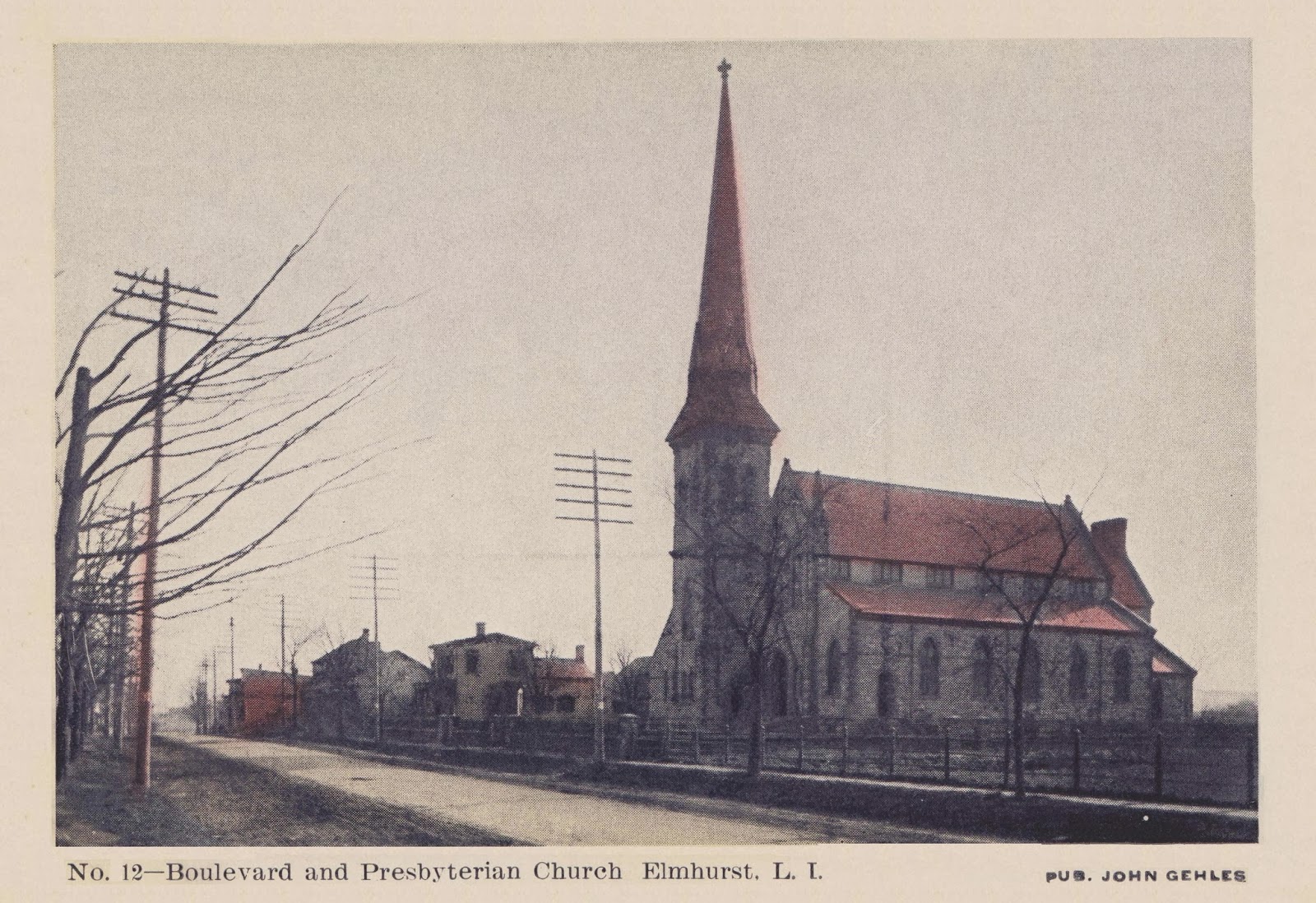
Classical Concert To Benefit Historic First Presbyterian Church of Newtown's Restoration
You are invited to a unique musical event, which will also contribute to a "high note" in historic preservation. On Sunday, January 19 at 1:30 PM, award-winning harpist Tomina Parvanova will be performing Classical works at the historic First Presbyterian Church of Newtown in Elmhurst.
For a $10 admission, the proceeds will benefit the restoration of this historic church, which was recently designated State& National Register of Historic Places status.
The church was founded in 1652, and the present Gothic sanctuary was built in 1895, and features stained glass by Tiffany artists. ALL are welcome!
The church is located on Queens Blvd & 54th Ave in Elmhurst, Queens. The R & M trains (east end) stop in front, and the Q58, Q59, & Q60 buses are within a block.
About the First Presbyterian Church of Newtown: http://www.fpcn.org/history
Historic & recent photos: http://bit.ly/1dVPoWA
About Tomina Parvanova: http://www.tominaparvanova.com/#!biography/c1enr
Please consider attending this great musical and restoration event, and circulate this blog posting.
Photos courtesy of Chairman Michael Perlman of the Rego-Forest Preservation Council
Wednesday, August 28, 2013
Iconic Forest Hills Tennis Stadium Makes A Comeback with Mumford & Sons
For Immediate Release
Contact:
Chairman
Michael Perlman
Rego-Forest
Preservation Council
Iconic Forest
Hills Tennis Stadium Makes A Comeback with Mumford & Sons
QUEENS, NY (August 28, 2013) - The iconic Forest Hills Tennis Stadium at 1 Tennis Place in Forest Hills is reopening as a concert venue on August 28 at 6 PM (doors open at 5 PM). British folk rock group, Mumford & Sons, along with two opening acts, will be the first major concert at the stadium since the 1980s. Over 16,000 tickets were sold within an hour. A reported nearly $1.5 million has been spent to restore and upgrade the Forest Hills Tennis Stadium since June 2013, and future restoration plans and upgrades are envisioned by the West Side Tennis Club and concert producers.
Chairman Michael Perlman of
Rego-Forest Preservation Council launched a grassroots campaign in July 2010,
calling for the preservation and creative reuse of the Forest Hills Tennis Stadium.
Meetings with local elected officials and civic associations were held, as well
as a petition drive and public relations campaign. That was followed by
meetings with the West Side Tennis Club.
In October 2010,
a bid by Cord Meyer Development to purchase the stadium parcel, and demolish
the majority of the stadium for condos was rejected by the majority of West
Side Tennis Club members. Perlman explained, "Disney-esque condos would
have torn the heart out of Forest Hills. Mixed-use creative revitalization will
likely yield a greater long-term economic return. The stadium has potential for
tennis matches, concerts, ice hockey, weddings,
exhibits, school trips, charity events, and art festivals.”
Rego-Forest
Preservation Council feels the stadium has the potential to be a 21st
century family destination, which would bring our communities closer together,
boost tourism, convey historic pride, educate our children, assist local businesses
through tough economic times, and be an incentive for newer businesses, such as
along the Austin Street corridor.
The
Forest Hills Tennis Stadium embodies firsts in tennis, music, and architectural
history. Designed by famed architect Kenneth Murchison and built by The
Foundation Company, it was the first concrete tennis stadium countrywide (1923).
It also accommodated National Tennis Championships, the Davis Cup and Wightman
Cup, and was the first home of the U.S. Open. It hosted tennis players such as
Bill Tilden, Helen Jacobs, Ted Schroeder, Rod Laver, Helen Wills Moody, Billie
Jean King, Roger Federer, Don Budge, Chris Evert, Martina Navratilova, and Arthur Ashe and Althea
Gibson who broke racial color barriers during a segregated time in tennis
history. The stadium also played cinematic roles, and was featured in key
scenes of Alfred Hitchcock's Strangers On A Train.
The
annual Forest Hills Music Festival and concerts took ground in the late 1950s and
continued through the 1980s, featuring the likes of The Beatles, Frank Sinatra,
Bob Dylan, The Doors, Ella Fitzgerald, Diana Ross, The Monkees, The Who, Johnny
Mathis, Barbra Streisand, Simon & Garfunkel, Trini Lopez, Diana Ross, Donna
Summer, and Peter, Paul, & Mary.
Rego-Forest
Preservation Council will continue advocating for preservation, restoration,
and historically-sensitive upgrades for the Forest Hills Tennis Stadium, for
the benefit of the stadium, the West Side Tennis Club, and the Forest Hills
community and beyond.
PHOTOS
Forest Hills Tennis Stadium photos and
memorabilia courtesy of Rego-Forest Preservation Council:
http://www.flickr.com/photos/8095451@N08/sets/72157607136282297
###
Wednesday, November 28, 2012
Our Lady Queen of Martyrs To Host Centennial Gala
Rego-Forest Preservation Council is proud to support the preservation and any historically-accurate restoration of Our Lady Queen of Martyrs Church in Forest Hills.
Our Lady Queen of Martyrs To Host Centennial Gala
by
Michael Perlman of the Forest Hills Times/Queens Ledger
http://www.foresthillstimes.com/view/full_story/20960017/article-Our-Lady-Queen-of-Martyrs-to-host-centennial-gala
| Our Lady Queen of Martyrs photos by Michael Perlman |
Our Lady Queen of Martyrs Roman Catholic Church is a sacred and scenic cornerstone in the heart of Forest Hills, and has been for generations. Now parishioners, alumni, and family and friends have the chance to be part of history in the making.
The “100 Years of Gratitude Centennial Dinner Dance Gala” will take place on December 3, at 6 p.m. at Russo’s On The Bay, 162-45 Cross Bay Boulevard in Howard Beach. All proceeds will benefit the church.
This conclusive centennial gala will mark a new chapter, while rejoicing its deeply rooted history of development and the growth of Catholicism since the congregation’s founding in 1912 in Forest Hills.
The gala will follow the glory of the November 18th Centennial Mass of Thanksgiving by Bishop Nicholas DiMarzio, and the June 3rd Centennial Concert, which featured the Sacred Music Society and honored Reverend Monsignor Joseph Funaro upon his retirement. Rev. Paul R. Sanchez is the new pastor.
As religious buildings age and congregations sometimes dwindle, this church has fared well in both areas, but is in need of funding for restoration and improvements. According to the church’s website, the Centennial Campaign seeks to raise $1,240,000, and $1,440,541 has been pledged by 433 families to date.
Parishioners expressed a bond and recognized the church’s commitment to the community. Parishioner BarbaraAnn Balzaretti Flannery, a member of the Sacred Music Society, will always recall the immediate welcome she and her husband received upon moving to Forest Hills six years ago.
“I have made friends for life, and we are truly part of an amazing family,” she said. “Our Lady Queen of Martyrs is such an important part of Forest Hills history, and I have always favored a magnificent, traditional cathedral. As a musician, the acoustics enable a glorious sound from the organ and orchestra when we have our Christmas concert, a sound that can be heard even from the street.”
Regina Judith Faighes, a parishioner for over 10 years and a lector and choir member, highly anticipates attending the Centennial Gala.
“As this Centennial year draws to a close, I will be a part of the generation that will begin our parish's next century,” she said. “Our church, school, rectory, and convent are architectural gems that are esthetically pleasing even to people who are not members of our Catholic faith. The beauty of these structures augments their sacredness, and I am grateful it did not undergo the modernization that happened to other churches its age following Vatican II.”
Our Lady Queen of Martyrs was modeled after England’s Durham Cathedral, which was erected from 1093 to 1130, and conveyed Medieval ties. The church’s campus is one of the most pristine, stately, and memorable sites in Forest Hills, and spans Queens Boulevard, Ascan Avenue, Austin Street, and 72nd Road.
Its architecturally harmonious buildings of three decades cast a Tudor Neo-Gothic presence within a suburban country setting, which passersby would not typically expect to encounter along the highly civilized Queens Boulevard. Regal architecture is complemented by mature Sycamore and Oak trees, a landscaped perimeter, and inner gardens.
The church’s sanctuary building at 110-06 Queens Boulevard was the recipient of a 1st prize architectural award in the Queens Chamber of Commerce’s annual building competition in December 1939.
Designed by architects Maginnis & Walsh of Boston and erected by the Edmund J. Naughton Building Corp. for a cost of $365,000, it was part of a $2,000,000 building plan. The groundbreaking took place on May 18, 1938, where Reverend Joseph R. McLaughlin told the operator “Now do your stuff.”
After the church was able to acquire a square block, McLaughlin shared his vision of a church and a rectory on December 3, 1936. It came to fruition when the church opened on November 5, 1939. In front of 3,000 attendees, Bishop Molloy led a dedication ceremony on May 30, 1940. The church signified the enthusiastic nature of a small Catholic community in Forest Hills, but with expanding demographics due to the nearby 1939-1940 World’s Fair, the new church became an icon in the eyes of many.
Backtracking, in January 1929, the church’s Parochial School at 72-15 Austin Street won a 1st prize award in the Queens Chamber of Commerce’s Institutional Buildings category. It was also designed by Maginnis & Walsh, and erected by Laurence J. Rice. To the benefit of the 22-year-old Forest Hills community, the sisters of the Immaculate Heart of Mary opened the school on September 9, 1928, and would later teach its students. Through 1939, the 500-plus seat School Hall hosted church services, and in 1984, it was named McLaughlin Hall in homage to the first pastor.
A three-story convent would rise on 72nd Road in 1953. In December 1954, it was also the recipient of a 1st prize architectural award by the Chamber. It would house 24 sisters of the teaching order, and contain a chapel. Carved in stone, the convent features a life-sized statue of Our Lady Queen of Martyrs.
Our Lady Queen of Martyrs’ 100 years can be traced to November 13, 1912, when permission was granted by Bishop Charles E. McDonnell for a Sunday Mass in Forest Hills. The Bishop was noted for the development of Catholic schools and churches to address Catholic immigrants’ spiritual needs.
Margaret Dealy offered her Forest Hills home for Mass. On May 28, 1916, a humble wood-framed chapel was dedicated by the bishop, but succumbed to fire on April 29, 1929.
The current church’s interior is grand yet warm, with its vaulted ceilings, archways, columns, and abundant stained glass. The perspective from the pulpit area makes it seem more intimate. The church is cruciform in layout, reminiscent of most early churches.
Architectural features are enriching, and offer a lesson in religious history. For example, The Pieta is one of many limestone carvings found over the arched main portal and secondary entrances on Ascan Avenue, as well as the Queens Boulevard portal.
Ornamental carvings include the Scale of Judgment and the Ten Commandments tablets, and the pelican brass gate in front of the altar. Wooden pulpit statues include St. Augustine.
The extensive quantity of multi-sized and shaped stained glass windows of the campus’ Weymouth granite, Indiana limestone, and Deer Island granite trimmed façades offer varying motifs and biblical lessons. A rectangular steeple bears dominance over Queens Boulevard, and a traditional spire adds uniqueness to Austin Street.
“The architecture and stained glass are magnificent, and with its illuminated façade at night, as our Administrator and former pastor Msgr. Funaro so well phrased it,” said Faighes, “it is a beacon of faith on Queens Boulevard.”
Sunday, March 11, 2012
Forest Hills Inn's 100th Anniversary Marked By Restoration & Historic Committee
This
is Michael Perlman's feature story on the Forest Hills Inn's 100th anniversary in the Queens Ledger/Forest Hills Times. Please feel free to post a
comment on the link & share it with your friends. Let's take part in
this historic moment:
http:// www.foresthillstimes.com/view/ full_story/17799132/ article-Scaffolds-come-down--re veal-Forest-Hills-history
![]() |
| Circa early 1920s postcard of the Forest Hills Inn towering over Station Square |
| The Inn as of August 2009 amidst scaffolding |
![]() |
| The Inn as of March 2012 |
Scaffolds Come Down & Reveal Forest Hills History
This prominent Forest Hills Gardens tower’s scaffolding and netting, which was erected circa 2004, is now at ground level at Station Square and Greenway South, and the repaired façade can once again be appreciated for its Tudor and Arts & Crafts appeal.
The Forest Hills Inn officially opened on May 1, 1912, making its restoration timely for its 100th anniversary.
Forest Hills Gardens originated in 1909. The Russell Sage Foundation appointed Grosvenor Atterbury as the Gardens’ principal architect, and Frederick Law Olmsted, Jr. as the landscape architect for public spaces and parks.
Inspired by Ebenezer Howard's Garden City Movement of England, this is our country's earliest planned garden community. It is a highly recognized model of urban planning, with Old English mansions tastefully situated on classically named private winding streets with lush landscape.
The board of Forest Hills Inn meets with contractors monthly to plan the restoration. The roof and facades of all three buildings have not been restored for at least the same number of decades, but now repairs on the Inn’s tower are complete.
Terra-cotta roof tiles were falling, and the pebble stucco finish on the façade became porous. This affected the metal structure underneath, allowing water into the apartments. Also weathered were top-floor terraces bearing gargoyles, which serve as drainage features.
“While examining the façades, we kept noticing weathered features, needing restoration,” explains Martin Restituyo, president of the One Station Square, Inc. co-op board. “Our five-year capital improvement plan, estimated at $3.5 million, will soon address all remaining restoration, which encompasses the Inn Apartments (of the Forest Hills Inn), the Raleigh, and the Marlboro. Restorations are funded through shareholder assessments. Unlike the past, we have appropriate plans and funds.”
“Restorations are funded through shareholder assessments,” he adds. “Unlike the past, we have appropriate plans and funds.”
Before Martin Restituyo’s presidency in December 2008, the previous board erected scaffolding around the Inn in 2004, without obtaining Forest Hills Gardens Corporation approval. The board felt it was essential due to emergency repairs, but the Gardens Corporation referenced restrictive covenants that protect the Gardens’ historic character.
By March 2009, the legal dispute between the Forest Hills Gardens Corporation and the Inn’s board was settled, and the tower’s repairs were completed in a year’s time.
Restoration of Station Square is costly, but possible with commitment. Friends of Station Square vice president Suzanne Parker explains the non-profit’s mission. “To protect, beautify, and educate the community about Station Square, Forest Hills, and its environs,” she says.
As a case in point, she cites re-installing a restored lantern to a corner of Burns Street after raising approximately $20,000, but that the majority of the eight remaining lanterns from 1910 are in deterioration. “Friends of Station Square embraced these whimsical icons of the prevailing Arts & Crafts style of the Square as an ongoing project, and continues its fundraising efforts,” notes Parker.
In the Inn’s early years, the Sage Foundation Homes Company distributed an illustrated 25-page prospectus to new residents and guests, establishing why the Inn and the Gardens is unique.
“Forest Hills Inn is a delightful all year round home for the busy man or woman who must spend the day in the city, but appreciates every minute saved for outdoor living and recreation amid wholesome and aesthetic surroundings,” read the brochure.
Station Square was conceived as a town center with the Inn, apartments, connected shops and the train station, which took locals to Penn Station in 13 minutes. The 150-room Inn’s rates were $14 - $18 per week, including meals. References were required. Guests were welcomed to socialize at the Inn’s reception and smoking rooms on a vine-screened loggia overlooking the square. Guests enjoyed dinner overlooking the Greenway and Tea Garden, which hosted weddings. Tennis courts, golf, billiards, and a squash court were other fine amenities.
Before Martin Restituyo’s presidency in December 2008, the previous board erected scaffolding around the Inn in 2004, without obtaining Forest Hills Gardens Corporation approval. The board felt it was essential due to emergency repairs, but the Gardens Corporation referenced restrictive covenants that protect the Gardens’ historic character.
By March 2009, the legal dispute between the Forest Hills Gardens Corporation and the Inn’s board was settled, and the tower’s repairs were completed in a year’s time.
Restoration of Station Square is costly, but possible with commitment. Friends of Station Square vice president Suzanne Parker explains the non-profit’s mission. “To protect, beautify, and educate the community about Station Square, Forest Hills, and its environs,” she says.
As a case in point, she cites re-installing a restored lantern to a corner of Burns Street after raising approximately $20,000, but that the majority of the eight remaining lanterns from 1910 are in deterioration. “Friends of Station Square embraced these whimsical icons of the prevailing Arts & Crafts style of the Square as an ongoing project, and continues its fundraising efforts,” notes Parker.
In the Inn’s early years, the Sage Foundation Homes Company distributed an illustrated 25-page prospectus to new residents and guests, establishing why the Inn and the Gardens is unique.
“Forest Hills Inn is a delightful all year round home for the busy man or woman who must spend the day in the city, but appreciates every minute saved for outdoor living and recreation amid wholesome and aesthetic surroundings,” read the brochure.
Station Square was conceived as a town center with the Inn, apartments, connected shops and the train station, which took locals to Penn Station in 13 minutes. The 150-room Inn’s rates were $14 - $18 per week, including meals. References were required. Guests were welcomed to socialize at the Inn’s reception and smoking rooms on a vine-screened loggia overlooking the square. Guests enjoyed dinner overlooking the Greenway and Tea Garden, which hosted weddings. Tennis courts, golf, billiards, and a squash court were other fine amenities.
The 100th anniversary of the Inn is marked by the board’s establishment of a Historic Committee, co-chaired by Martin Levinson and George Hoban, who is collecting memorabilia for preservation’s sake, while telling a most significant chapter of Forest Hills history.
![]() |
| "The Innside Story" on a super-sized matchbook cover, circa 1950s |
![]() |
| The social heart of Forest Hills! Amazing how the matches were embellished with an artist's touch. |
![]() |
| If we were able to journey back in time, which space(s) should define your day? |
![]() |
| One of many matchbooks from the Forest Hills Inn's hotel days under Knott Management |
| Station Square has a traditional yet renewed sense as the seasons change |
| The banner on the right boasts the Forest Hills Gardens Centennial in 2009, but the Forest Hills Inn opened in 1912. |
![]() |
| Forest Hills train station |
![]() |
| Wide perspective on the Forest Hills train station |
| Fall 2009 photo: Friends of Station Square planned on restoring 1 of 8 Arts & Crafts lanterns designed by Grosvenor Atterbury. |
| View from Greenway Terrace towards the Forest Hills Inn at Station Square, March 2012 |
Subscribe to:
Posts (Atom)