Thursday, March 20, 2014

Zac Brown Band: Welcoming Summer 2014 at the Forest Hills Tennis Stadium

Stadium Architect Kenneth Murchison's great-granddaughter Lynne de Wardener-Burris and great great-granddaughter Skye Burris
Zac Brown Band, Courtesy of Zac Brown Band website


Act Two at the iconic Forest Hills Tennis Stadium! On June 21, the summer will begin with high notes as the three-time Grammy winner and Multi-Platinum Zac Brown Band will take the stadium stage, and open the summer 2014 concert series. Other great names headlining today’s entertainment will soon be announced.

On June 21, doors will open at 5 PM for a 6 PM show, and as the sun sets somewhat later that evening, the audience will be left with an impression for concerts to come. Tickets will be available on March 22 at 10 AM through Ticketfly.com. America’s first concrete tennis stadium, dating to 1923, has undergone restoration work in addition to some renovations, which include ticketed seating, improved ADA seating, widened aisles, handrails, and easier access to food, beverages, and other accommodations. The public can now bookmark a new website, www.foresthillsstadium.com

In August 2013, U.K. folk rock band Mumford & Sons, along with opening bands Bear’s Den and The Vaccines marked a new chapter of Forest Hills history by entertaining 17,000 fans in a stadium that was nearly sold for a condo just 3 summers earlier.

Mumford & Sons plays Forest Hills! Courtesy of Michael Perlman, Rego-Forest Preservation Council

Mumford & Sons became the first major musical act at the stadium since the 1980s, which not only attracted new fans, but struck a chord for patrons who recalled the annual Forest Hills Music Festivals of the 1960s through the early 1980s. Forty-nine years to the day, The Beatles delivered a legendary performance. Memorable summers also featured music greats including Frank Sinatra, Donna Summer, Bob Dylan, Barbra Streisand, and the Rolling Stones. 

Frank Sinatra about to go on stage with Count Basie at the Forest Hills Tennis Stadium's Summer 1965 Music Festival, Photo courtesy of Robert Rauschenbach

Some fans also recalled pivotal moments in tennis history, such as those witnessed during the U.S. Open prior to 1978, or when Arthur Ashe and Althea Gibson broke racial color barriers. Others reminisced the stadium’s cinematic role in “Strangers On A Train,” where Alfred Hitchcock filmed Davis Cup matches between Australia and the United States. 

"America's Tennis Stadium" ad, published in MIT's "The Technology Review" in 1922, Courtesy of Rego-Forest Preservation Council
A foremost public building architect, Kenneth Murchison, made his mark on Forest Hills by designing the stadium. “A resurgence of a concert scene at the Forest Hills Tennis Stadium is a wonderful addition to the cultural fabric of the city,” stated Murchison’s great-granddaughter Lynne de Wardener-Burris, who first visited with her family last summer. She explained, “Many current music and sports venues are so removed from the people they are meant to attract, that it was refreshing to see this gem in midst of a thriving residential community. It felt like a people's place built on a human scale, and I know my great-grandfather would love that his work is being preserved and utilized.”
Architect Kenneth Murchison, Courtesy of Pati de Wardener
Past and present community residents are equally enthusiastic about the stadium’s second season. “We are very excited to see the Zac Brown Band,” said Sandra Mandell, who owns Oliloli Studio on Metropolitan Avenue. “It is such a treat to attend a concert right in our neighborhood. I am looking forward to my first experience at the Forest Hills Tennis Stadium, a venue rich with history, and I hope this new era brings more art and culture to Forest Hills.”

Jodi Kass-Tracten now resides in Redding, Connecticut, but will never forget Forest Hills. “In the mid-1960s, the night that Sammy Davis Jr. performed was magical. The air was crisp and the place was packed. He sang for hours, and then of course no one wanted him to leave, so he sang some more.” She continued, “It’s still such an elegant place, and I'm thrilled that the Stadium has reopened for concerts.”

My mother knew my sister and I were Beatles fans, so she bought us tickets in the summer of 1964,” said Las Vegas resident Judith Becker. She explained, “I can vividly remember everyone’s excitement, as they looked up to see their helicopter arriving and landing on the grass courts. I spent my teenage years seeing concerts with friends, and I remember sneaking in through a hole in the fence.” In closing remarks, she added, “I haven't been back to Forest Hills for many years, but I would sure go back to see a concert at the Forest Hills Stadium, a beautiful and intimate venue.”

The audience at Mumford & Sons, August 28, 2013 photo courtesy of Michael Perlman, Rego-Forest Preservation Council

America's first concrete tennis stadium, Courtesy of Michael Perlman, Rego-Forest Preservation Council

 A similar edition of this feature appeared in Michael Perlman's Forest Hills Times column: http://www.foresthillstimes.com/view/full_story/24773509/article-Zac-Brown-to-kick-off-summer-in-Forest-Hills

Thursday, March 6, 2014

Austin Street Retail District At Risk


The Forest Hills community is at risk. Learn more by visiting Michael Perlman's column in the Forest Hills Times/Queens Ledger:

http://www.foresthillstimes.com/view/full_story/24686039/article-Austin-Street-retail-district-at-risk

71-53 Austin St received a Stop Work Order by the NYC Dept of Buildings: One of the signs of how select property owners are undermining the integrity of the historic retail district

Austin Street, long known for its independently owned boutiques, novelty shops and culturally inspired restaurants, may soon be on the verge of becoming “medical center row,” as several businesses are slated to expand from the thoroughfare’s west section eastward.

Over the past decade, the retail district has been marked by the closure of many small businesses, including Daniella Boutique, Santa Fe Steakhouse, Stoa Jewelry, Buster Brown Shoes, Homestead Gourmet Shop, and Art World. Pasta Del Giorno at 70-49 Austin Street, which opened in 1989 and offered fine Italian dining, closed in mid-February.

The closed shops made way for large corporations, including banks, chain pharmacies, clothing shops, and cell phone stores, to move in after landlords imposed hefty rent increases upon some longtime tenants.

“I am very upset so many boutiques have closed, such as Lulu’s, Austin Jeans, and Piccolo Mondo,” said Elias Kalogiros, who co-owns Austin Street's Exo CafĂ©. “There used to be a nice combination of middle to high-end shops, but the neighborhood is changing based on what landlords are asking. Some rents on Austin Street are even higher than Manhattan, so we can expect more medical facilities, banks, and office buildings.”

Rumor has it that UA Brandon Cinemas at 70-20 Austin Street will close shortly for a medical business. A February job filing with the Department of Buildings states an existing legal use for a theater and a proposed use for an “ambulatory diagnostic” establishment.

Likewise, nearby shop Second Time Around also closed recently, and a permit issued last month calls for “construction of a new urgent care office including limited demolition.”

“This is supposed to be a shopping area and should stay like this,” said Sal Wahd, manager of Leather Boutique.

In summer 2013, the community learned that a new glass building was proposed for 71-53 Austin Street, and would be home to an H&M clothing store. But banners posted last October instead read “Coming Soon – ProHealth Urgent Care.”

“It is sad enough that so many stores are closing due to harsh economic times, but having more medical facilities won’t do anything for Forest Hills,” said Lisa Jaume of Lady Love Boutique at 71-63 Austin Street. “A glass building will take away from the charm of Austin Street, and a vacant lot attracting vandalism is unwelcome in such a prestigious neighborhood.”

Her concerns have become a reality, as the property is now covered in graffiti and trash collects behind the construction fence.

“This is not a medical street,” said Natasha Nirmal, owner of Urban Creations Fashion Boutique at 71-54 Austin Street. “More shops and restaurants would be beneficial for the entire street, and may help businesses that are suffering. I hope the medical facilities won’t affect our retail parking.”

Commenters on Edge of The City: A Forest Hills Blog have suggested a make-your-own salad take-out place, an independent coffee house, an upscale diner, and a good, reasonably priced Chinese restaurant.

“Before a medical center opens on our main shopping strip, how about we first get some of the restaurant options that so many other thriving neighborhoods in New York City already have for years?” asked Drake Michell, webmaster for the site.

“It concerns me that we will have an abundance of urgent care facilities in a four-block radius,” added Leslie Brown, president of the Forest Hills Chamber of Commerce. “I will be delving into some concerns of small businesses and possibly scheduling a meeting.”

Forest Hills co-op owner Ron Daniel, who is also a licensed real estate salesperson with Sotheby's International Realty NYC, offered his take on the situation.

“Unfortunately, there is no Austin Street BID to work with business owners, landlords, the community, and Community Board 6 to incentivize and spur growth of new retail and restaurant operators,” he said. “These groups must devise a comprehensive plan to create a cohesive atmosphere for this high foot traffic street. Business operators need to begin by banding together because the landlords certainly are not.”


If you are a concerned Forest Hills resident or business owner and care about the future of your community, please email Rego-Forest Preservation Council at unlockthevault@hotmail.com 

Thursday, February 20, 2014

Richard Haas’ Mosaic Masterpiece on Queens Boulevard Turns 25


Richard Haas' mosaic mural, Photo by Michael Perlman, Rego-Forest Preservation Council


Queens Boulevard has shops, buildings, roadways, and a few public works of art… if you look carefully enough. This year marks the 25th anniversary of a mosaic mural designed by the famed architectural muralist, Richard Haas.  

The mural adorns the curved façade of TD Bank at 108-36 Queens Boulevard in Forest Hills. It showcases America’s earliest planned garden community, the Forest Hills Gardens, which originated in 1909. At the foot of Station Square sits the Long Island Railroad Station, which extends across its width. Bearing prominence in the mural is the Forest Hills Inn, which opened in 1912 and towers over Station Square. The scene commemorates the Gardens’ Tudor and Arts and Crafts styles, as well as monumental trees, which resulted from the partnership of principal architect Grosvenor Atterbury and landscape architect Frederick Law Olmsted, Jr. 

The charm is further captured through a birdseye view of homes beyond the Inn, as well as specific examples of cottages in individualized windows along its perimeters. Also depicted is a cornerstone of tennis and music history, the Forest Hills Tennis Stadium, which opened in 1923, and a backdrop of the Manhattan skyline featuring the Twin Towers. 

“I have always said this was one of my secret favorites,” said Richard Haas. “I was taken by the history of Forest Hills as a planned community based more on English and other European precedents.” He designed the mural as the first of an extensive series for the Home Savings Bank of America in 1989. It was executed in Spilimbergo, Italy by professional craftsmen under Mr. Trasavenuto’s leadership, and installed by Mr. Cravato in Forest Hills.      
 
Haas’ contemporary creations often become relics. “It's so classic-looking, that I had no idea it was such a recent creation,” said Kew Gardens resident Liz Manning Jarmel.
 
Actor Emil Beheshti, a former Forest Hills resident said, “I am proud to see Richard Haas’ beautiful mosaic, as it reflects my childhood and the care given by residents. It reminds us of the rich history of Forest Hills and its gorgeous architecture.”

The mural was on the brink of demolition when Commerce Bank became the tenant in the mid-2000s, and referenced their storefront design standards. That was when landlord Cord Meyer Development Company had requirements of their own. “It would have been almost sacrilegious to alter or remove the mural. We appreciated the mural’s beauty and significance, as well as the survival of the World Trade Center picture,” said Anthony Colletti, Chief Operating Officer of Cord Meyer. “We made keeping the mural a deal breaker. Soon after, everyone was a winner; Cord Meyer, Commerce Bank, and most importantly, the community.”

Queens residents expressed their pride. Kevin Walsh, Founder of Forgotten New York hopes the mural will not be forgotten. “Now we can be thankful that Richard Haas' fanciful depiction of Station Square and the Gardens beyond will remain, to inspire generations to come.” 

I pass this several times a week, and on sunny days, the gold mosaics absolutely gleam,” said Regina Judith Faighes. “It is an aesthetically beautiful monument to our beloved Forest Hills, and I feel there should be a ceremony honoring the very talented Richard Haas and his gift to our community.”

One of Haas’ major tools is his paintbrush, which he applies to a façade and redefines a technique known as “trompe l’oeil.” He creates an optical illusion by adding architectural detail and dimension to an otherwise blank canvas. Last year, he told CBS Sunday Morning, “A mural contains a neighborhood in many ways. It begins to make people aware of what the beauty is that’s around them.”

Richard Haas, Courtesy of the artist

In 1978, Paul Goldberger, a Pulitzer Prize-winning architectural critic and educator wrote, “The art of Richard Haas is at once entirely realistic and quite fantastic.” He then went on to say, “From a period when Haas began to make small dioramic boxes of artist’s interiors in the mid-Sixties and later New York street views, to the time when he was involved in full scale reshaping of urban exterior and interior environments, Richard Haas has been an ‘urban artist’ without peer.”

Richard Haas was born in 1936 and raised in Milwaukee. In the mid-1950s, he worked as a stonemason assistant to his great uncle George Haas, who was the master stonemason at Taliesin, the home of Frank Lloyd Wright. As an assistant professor at Michigan State between 1964 and 1968, it afforded him the opportunity to meet notable artists and critics such as Barnet Newman, Clement Greenberg, and Jules Olitski. In 1968, he made New York his home, and in 1975, painted his first outdoor mural featuring a replica of a cast-iron façade at Prince Street and Greene Street. This led to various outdoor commissions across America, which continues to this very day.

A similar version of this story appears in Michael Perlman's Forest Hills Times column: http://www.foresthillstimes.com/view/full_story/24564285/article-Queens-Boulevard-mosaic-turns-25

Saturday, February 1, 2014

Seeing Tomorrow For The NYS Pavilion - Landmark & Restore This Icon!

Preservation campaign painting by Doug Leblang of the NYS Pavilion at the 1964 World's Fair

~ Rego-Forest Preservation Council requests NYC Individual Landmark status, restoration, and creative reuse for the iconic New York State Pavilion. 

~ Below is an article written by Michael Perlman, a Forest Hills Times Columnist and Rego-Forest Preservation Council Chairman: http://www.foresthillstimes.com/view/full_story/24482353/article-Envisioning--tomorrow-for-the-Tent-of-Tomorrow


The 50th anniversary of the 1964 World’s Fair in Flushing Meadows Corona Park is nearly three months away, but the symbolic New York State Pavilion, which could be celebrated as one of Queens’ most cherished sights, exhibits weathered architectural elements behind fenced off perimeters. Its significance is largely unknown to younger generations. 

    “People For The Pavilion,” an organization led by visionaries Matthew Silva, Christian Doran, and Salmaan Khan, held the first presentation, question and answer session, and reception at the adjacent Queens Theatre on January 25, attracting an audience of over 200. The organization is dedicated towards the NYS Pavilion’s preservation, and recognizes its value as an iconic piece of New York City history and its potential as a vibrant space for surrounding neighborhoods and the greater community. 


 To capture its future potential and history, Matthew Silva, a technology and video production teacher founded a Facebook group and page, and began producing a documentary called “Modern Ruin: A World’s Fair Pavilion.” It will feature interviews with Fairgoers, operators, and architects. The trailer has been released, and Silva is now raising funds through Kickstarter to see it through.   

NYS Pavilion preservationists attend the People For The Pavilion event, Jan 25, 2014
Famed architect Philip Johnson designed the Modernist NYS Pavilion, which celebrated innovation. It consists of the Tent of Tomorrow, which exhibited the world’s largest multi-colored plexiglass suspension roof and a terrazzo Texaco road map of New York State. After the Fair, it operated as a concert venue attracting the likes of Led Zeppelin, and was also a roller skating rink. Fairgoers would also take an elevator to the top of the Pavilion’s three Observation Towers, which offered panoramic views of the city, as well as frequent Theaterama (now the Queens Theatre). The NYS Pavilion acquired its role in the spotlight on a segment of “The Flinstones” and in “Men in Black.”  

Even The Flinstones made a stop at the 1964 World's Fair!

 
After conducting structural studies, the Parks Department released figures in December, with options of restoring the NYS Pavilion for a new use at $72 million, stabilizing it as a ruin for $43 million, or demolishing it for $14 million. A combination of these findings and the event fueled locals’ determination to see a future for the NYS Pavilion. Suggestions for creative reuse outpoured. 

Notable film historian Tom Stathes envisions bringing his "New York Cartoon Carnival" to the Pavilion. He explained, “I showcase my early animation series mostly in Brooklyn, and would love to have more local spaces such as the Pavilion available for some of my outdoor screenings. I'd be more than willing to coordinate a fundraiser as part of my series, with the group seeking to preserve this important structure.”
   
“When I look out from the Queens College library, I see the Pavilion’s blinking light and remember my childhood,” said Enzo Longo. He envisions it as a public venue for discovering cultures and new technologies. “Almost everyone in Queens is either an immigrant or a descendent that can connect with this World Fair's theme.” He would like to see “Shakespeare in the Park” at the Pavilion, and a literary site where nearby high school and college students can discover its connection to the valley of ashes in F. Scott Fitzgerald's “The Great Gatsby.” “New York is a fertile place to enact some New Deal lessons, so let’s employ people with a living wage to restore the Pavilion,” he said. 

Friends Michael Torre and Mary Rose Kaddo visualize live music and a beer garden at the Tent of Tomorrow during the milder months. Torre stated, “Queens’ main political leaders need to care about landmarking. This is an accessible world-class site, which should bring a positive attitude to our borough.”

Howard Fein felt very encouraged by the event’s turnout. He said, “It shows that people really care. The site has an emotional connection to those who remember it as the Pavilion, and its unique architecture has captured the imagination of those too young to remember the 1964 World’s Fair.”


 The panel expressed its mission of securing NYC Individual Landmark status for the NYS Pavilion as one of the first steps, and The New York Landmarks Conservancy collaborated with People For The Pavilion to help accomplish that. Director of Development Scott Leurquin referred to the NYS Pavilion as the Fair’s architectural star. Crediting the site’s National Register of Historic Places status, he said, “We will provide guidance and support in securing City Landmark designation.” He continued, “The Conservancy urges the Parks Department and elected officials to work together to make sure that the site is properly repaired and reopened to the public. Adaptive reuse is not only feasible, but can lend itself to a host of activities.” 
The symbolism of sun despite cloudy times at the Tent of Tomorrow

May new generations have the chance to re-enter an icon!

Friday, January 17, 2014

Classical Concert To Benefit Historic First Presbyterian Church of Newtown's Restoration


You are invited to a unique musical event, which will also contribute to a "high note" in historic preservation. On Sunday, January 19 at 1:30 PM, award-winning harpist Tomina Parvanova will be performing Classical works at the historic First Presbyterian Church of Newtown in Elmhurst. 

For a $10 admission, the proceeds will benefit the restoration of this historic church, which was recently designated State& National Register of Historic Places status.

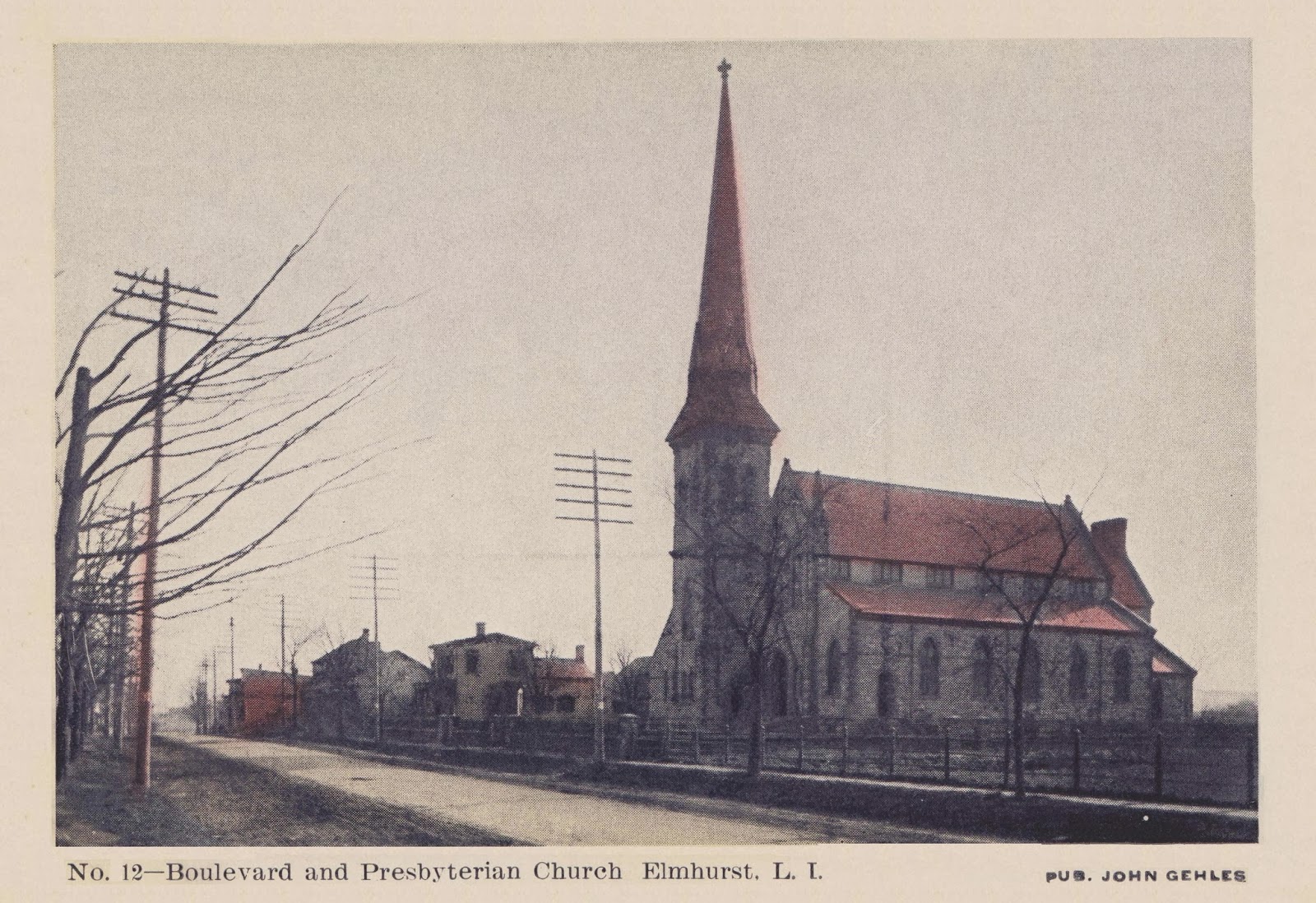
The church was founded in 1652, and the present Gothic sanctuary was built in 1895, and features stained glass by Tiffany artists. ALL are welcome!

The church is located on Queens Blvd & 54th Ave in Elmhurst, Queens. The R & M trains (east end) stop in front, and the Q58, Q59, & Q60 buses are within a block.

About the First Presbyterian Church of Newtown: http://www.fpcn.org/history

Historic & recent photos: http://bit.ly/1dVPoWA

About Tomina Parvanova: http://www.tominaparvanova.com/#!biography/c1enr

Please consider attending this great musical and restoration event, and circulate this blog posting.


Photos courtesy of Chairman Michael Perlman of the Rego-Forest Preservation Council