Showing posts with label Individual Landmark. Show all posts

Wednesday, March 11, 2020

Annual Preservation Conference Unites Citywide Advocates

By Michael Perlman

Preservation conference panel, Photo by Michael Perlman
The Historic Districts Council (HDC), a citywide advocate for New York’s historic neighborhoods, hosted the 26th Annual Preservation Conference at John Jay College on March 7. Hundreds of preservationists from the five boroughs networked and discussed strategies in preserving historic buildings and districts that grant community distinction, with an aim of strengthening the preservation ethic through tools including Individual Landmark (façade) and Historic District status via the NYC Landmarks Preservation Commission, as well as the State & National Register of Historic Places. 

Rego-Forest Preservation Council at the preservation fair
Rego-Forest Preservation Council flyer, March 2020
An annual preservation fair offered an opportunity for organizations to present current initiatives and display posters, brochures, and petitions at tables. Diverse attendees included Rego-Forest Preservation Council, Docomomo, South Street Seaport Coalition, 300 East 25th Street Block Association, Lower East Side Preservation Initiative, NY Preservation Archive Project, Greenwich Village Preservation, Park Slope Civic Council, Iron Hills Civic Association, Save Chelsea, Bronx Borough Landmarks Committee, Mott Haven Historic Districts Association, and Hart Island Project. Networking continued over a buffet lunch. 

Iron Hills Civic Association & friends, Photo by Michael Perlman
Section of preservation fair, Photo by Michael Perlman
This event builds upon the success of the recent ceremony where the “Six To Celebrate” 2020 communities meriting preservation are Rego Park, East Flatbush, Center Park Slope, Bronx Preservation Committee, Todt-Dongan Hills, and Landmarks of the Future Citywide. Rego-Forest Preservation Council advocates for landmark status for significant sites in Rego Park, Forest Hills, and nearby Queens communities, and documents local history. Presently, Forest Hills has three official landmarks, Remsen Cemetery (designated 1981), Ridgewood Savings Bank (2000), and Engine 305 & Ladder 151 (2012), but Rego Park has no designations. 

Simeon Bankoff, executive director, Historic Districts Council, Photo by Michael Perlman

HDC President Daniel Allen, Photo by Michael Perlman
HDC President Daniel Allen explained their success since 1970. “We have produced hundreds of programs about New York’s history and educated thousands of people about how to protect their historic neighborhoods, worked on gaining designations of more than 125 of the soon-to-be 150 historic districts, and reviewed thousands of proposals to alter historic buildings.” He continued, “Since last year’s conference, preservationists fought hard to protect the city’s character.” Landmark designations include Bay Ridge’s first historic district and Tin Pan Alley. “Each advancement has something in common; a fierce group of preservationists holding rallies, sending e-blasts, writing letters, bothering elected officials, and testifying at hearings.” A short film of preservation stories proved what makes our city special, and also included Landmarks Lion award recipients such as historian Barry Lewis and preservationists Christabel Gough and Kitty Carlisle, and Grassroots Preservation Award recipients. 

Chair Sarah Carroll, NYC Landmarks Preservation Commission, Photo by Michael Perlman
There are over 37,000 landmarked buildings and sites, including over 1,400 Individual Landmarks, 149 Historic Districts, 120 Interior Landmarks, and 11 Scenic Landmarks. HDC Executive Director Simeon Bankoff introduced keynote speaker, Chair Sarah Carroll of the NYC Landmarks Preservation Commission (LPC). She explained, “NYC is a vibrant city whose history is revealed through its built environment. I believe that preservation is integral for the dynamism of this city and is a significant factor in NYC being a global destination. It was because of New Yorkers’ growing concern for the protection of the city’s history, that the Landmarks Law was enacted 55 years ago.”

During her time at the LPC for over 25 years in various roles, she has strived to initiate fairness and equity to the agency. She explained, “I firmly believe that preservation needs to represent and reach more communities, and that means representing our diverse history, and in the long-run, promoting preservation in all communities. We are working to ensure diversity in designations, making sure that we are telling the stories of all New Yorkers, and really looking at communities that haven’t had a voice in the past. We are working to ensure effective outreach for our regulatory work and garnering support for designations while recognizing NY’s incredible diversity, and ensuring fairness, transparency, and efficiency in regulations, so that proposed work is approved in a timely manner and that we are supporting property owners through technical assistance and improved guidance.”

She continued, “Preservation is more than just protecting our historic buildings, but about providing life to these buildings, so they can continue to be relevant tomorrow because as speaker Corey Johnson says, ‘In a city as dynamic as New York, the only constant is change.’”

A recent LPC goal is to identify newer buildings that reflect the more recent NYC history. She said, “It is vitally important that we think ahead and protect these properties that continue to represent the city’s changing nature, as well as the diversity of our social and cultural history.”

“In order to be equitable, we need to nurture preservation in less represented communities that may not have the architectural icons that earlier districts had, but have equally strong historic and cultural value,” said Carroll. 

Preservation session led by Simeon Bankoff, HDC, Photo by Michael Perlman
Participant-driven conferences are a component that differentiates this event from others. In classrooms, leaders delivered 45-minute sessions on NYC preservation topics which were voted upon by preservationists, and the winners were “South Street Seaport,” “Not Just Preservation,” “What About Penn South?,” “Lower West Side,” “Quarantine Island,” and “Preservation Manifesto.”

Simeon Bankoff’s presentation pinpointed that New Yorkers inherit the city and need to pass it down to future generations in a recognizable shape, and asserted that the government is the nurturer of citizens and must provide a healthy environment, safety, education, housing, and a stable economy. Additionally, equal access and the opportunity to utilize public resources are essential. Attendees proposed advocating for more preservation-friendly people in public office and offering training sessions, having buildings over a certain age become landmarks (similar to other municipalities), and having the full LPC body review proposed designations, the LPC holding public hearings at a certain threshold of community support, and every community having access to open space and protection of their historical resources. Suggestions also included implementing citywide planning which includes preservation and sensitive contextual development, modifying mayoral appointments of commissioners, instituting a demolition tax based on environmental factors and an EIS peer review, and strengthening community board oversight. A main point was that our historic city’s preservation is equally as important future housing and climate resiliency. 

50+ years of advocacy panel, Photo by Michael Perlman
Plenary sessions were inspired by HDC’s 50th anniversary. The first session, “50+ years of advocacy” reflected upon HDC’s preservation work and posed the question of what will advocates seek to preserve in the next 50 years. Panelists pinpointed current preservation challenges and proposed directions meriting exploration. It featured moderator Angel Ayón, Gregory Dietrich, Christian Emanuel, and Vicki Weiner. As a case in point for Queens, Emanuel, a real estate broker, was a dormant preservationist until his parents, commercial tenants at the Bank of Manhattan Company tower in Queens Plaza were facing eviction, and what was once Queens’ first skyscraper (1927), was threatened with demolition. They partnered with the HDC and rallied support from the community and elected officials, and the building was landmarked within a year. Today, Emanuel is on HDC’s board of directors. 

Designation tales panel, Photo by Michael Perlman  
The second session, “designation tales” largely focused on landmarking success stories told by advocates and offered advice on the process. Panelists were moderator Kelly Carroll, George Calderaro, Julia Charles, Jim Protos, and Keith Taylor.

Friday, May 11, 2012

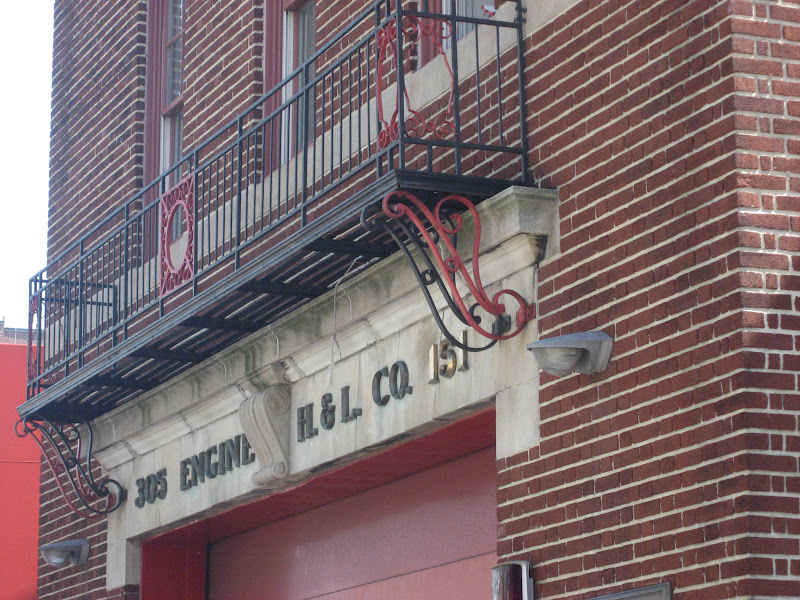
Forest Hills Firehouse Landmark Hearing on May 15th - Please Testify In Support


The NYC Landmarks Preservation Commission will hold a public hearing on Tues, May 15th from 10:30 AM - 10:40 AM at the Municipal Building at 1 Centre St, 9th Floor, NYC. Please either email testimony or testify in person, in favor of Individual Landmark status for Engine Company 305/Hook & Ladder Company 151. This historic firehouse is at 111-02 Queens Boulevard, Forest Hills. Anyone can testify. The firehouse will be public hearing item #5: http://www.nyc.gov/html/lpc/downloads/pdf/calendar/05_15_12.pdf

- Landmarks Preservation Commission Hearing Comments: comments@lpc.nyc.gov
- Director of Intergovernmental Affairs Jenny Fernandez: jfernandez@lpc.nyc.gov

- Chairman Robert Tierney: rtierney@lpc.nyc.gov  

- Director of Research Mary Beth Betts: mbetts@lpc.nyc.gov 

- Rego-Forest Preservation Council Chairman Michael Perlman: unlockthevault@hotmail.com


For historic information as part of your letter of support, please visit Michael Perlman's feature in the Forest Hills Times/Queens Ledger:
http://www.foresthillstimes.com/view/full_story/18433020/article-Forest-Hills-firehouse-may-become-landmark 

Pictured from left to right are Dan Trabucchi, Lieutenant John Gleave, Henry "Hank" Rider, Anthony Quinones, and John Cabrera.
Forest Hills has a 106-year history, but only two official New York City landmarks since the Landmarks Preservation Commission’s establishment in 1965. Now Forest Hills may get its third officially designated individual landmark.

On April 17, Engine Company 305/Hook & Ladder Company 151 at 111-02 Queens Boulevard was scheduled for a May 15th hearing by the Landmarks Preservation Commission (LPC), offering temporary protection from significant alterations.

The next step is a public hearing, where citizens, preservationists, and elected officials can testify. A public meeting will then follow, when the LPC will announce its decision.

According to Rego-Forest Preservation Council’s Freedom of Information Law request and an LPC visit in 2008, it was determined that the LPC's Survey Department conducted a Community Board 6 Survey in January 1990, comprised of Forest Hills and Rego Park.

The firehouse was one property recommended as a potential landmark, among a few hundred pages referencing other potential individual landmarks and historic districts. However, it is unknown why no designations were pursued at that time.

In recent years, architecturally and culturally significant sites - which offer a one-of-a-kind history - such as Eddie’s Sweet Shop, the Forest Hills Tennis Stadium, the Trylon Theater, and Bank of America (originally Metropolitan Industrial Bank, 99-01 Queens Boulevard), have not been given a public hearing by LPC, although some of those sites have been recommended for landmarking by earlier commission staff members.

Some sites were rejected, despite apparently meeting the LPC’s landmark provisions, based upon a site’s 30-year age requirement and architectural and cultural significance.

Queens residents hope that landmarking the firehouse will signify more designated buildings in Forest Hills and Rego Park at large. In 2000, the façade of the Ridgewood Savings Bank was landmarked, and the Remsen Family Cemetery was landmarked in 1981.

If the firehouse is landmarked, it would be the first Forest Hills property designated under LPC Chairman Robert Tierney's tenure.

LPC Communications Director Lisi de Bourbon would not comment on whether other Forest Hills properties have been surveyed by the commission due to policy issues, but did say, “The proposed designation of Engine Co. 305 is part of a wider effort to preserve New York City’s great municipal architecture.”

Mitchell Grubler, Chair of Queens Preservation Council, explains, “While we applaud the LPC for calendaring a Forest Hills building, this is a poor attempt at LPC recognition of the many deserving, but undesignated areas and buildings in Forest Hills,” said Mitchell Grubler, chair of the Queens Preservation Council.

“This is a case of picking-off the lowest-hanging fruit,” he continued. “It is a city-owned building, with no owner opposition. Landmark designation of city-owned buildings is advisory, since city agencies abide by LPC as a courtesy. This also seems to be somewhat of a thematic calendaring, in that a couple of Bronx firehouses were calendared at the same LPC meeting.”

During a time when the Bloomberg Administration has proposed firehouse closings due to budget cuts, Engine Company 305 has proudly served the community for nearly 90 years.

Built circa 1922-1924 and designed by John R. Sliney, it offers a distinctive and rare Neo-Medieval presence on Queens Boulevard. The firehouse has harmony with nearby Forest Hills Gardens, and its height and ecclesiastical nature is unique in the face of New York City firehouse architecture.

LPC’s statement of significance explains that the firehouse was “intended to serve the growing population of Forest Hills, which had seen a boom in residential construction following WWI.”

It then explains it is “clad in red brick laid in a Flemish bond, and enlivened with decorative limestone details and subtle patterned brickwork. The asymmetrical massing of the building is accentuated by steep gables clad with copper standing-seam roofs, two prominent square towers featuring round-arched window openings, and a slender chimney rising nearly a story above the western elevation.”

“It is exciting to know that the firehouse can be held to landmarking standards,” said FDNY spokesman Jim Long. “If it follows through, we will do everything in cooperation with the landmark guidelines, and adhere to requests and requirements.”

Commitment to the community is abundant. John DePierro is a senior firefighter who has been with Engine Co. 305 since 1969.

“What makes work enjoyable is the great camaraderie,” said firefighter John Cabrera. “This helps when we respond to a fire. There’s no emergency we don’t respond to, and no one has been shooed away from us. Some people knock on our door.

“There’s an officer who received a medal for saving a community resident,” he added. “We received Christmas cards and cakes from the community, and really appreciate their support.”

On September 11, Engine Co. 305 witnessed casualties. Peter Nelson was a senior firefighter who began his career with Engine 305, was transferred to Ladder 151, and then perished at Rescue 4. Joe Hunter worked up to a year at Engine 305, and also perished.

“I thought it was landmarked already,” said Lieutenant John Gleave. “There’s no other firehouse quite like it.”

Twelve-year Forest Hills resident James Griffin is a retired teacher and a volunteer photo archivist of the American Museum of Natural History.

“The firehouse is a noble expression of civic values, and a beautiful building gracing Queens Boulevard,” he said.

"Forest Hills and Rego Park have numerous iconic buildings that contribute greatly to the cultural history of our community,” said Assemblyman Andrew Hevesi. “This well-known structure should be given landmark status, which would preserve its integrity and value for many generations to come.”

Photos courtesy of Michael Perlman: http://www.flickr.com/photos/8095451@N08/sets/72157623132704134


Wednesday, February 2, 2011

Landmarks At City Council: New Service Launched To Keep An Eye & Comment Publicly


I am writing to you to let you know about a brand-new service my office is starting to help keep those interested in Landmarks designation informed about the City Council portion of the process.

As you know, the City Council reviews the designation of Landmarks and Historic Districts after their review by the Landmarks Preservation Commission. The hearings for these items are held in the City Council’s Land Use Subcommittee on Landmarks, Public Siting and Maritime Uses, which I chair.

We would like to help keep interested members of the public informed about the agenda of the committee and opportunities to comment publicly. 

You and others who are interested can sign up for an email that will give you the agenda of the subcommittee when it is available here:
http://bradlander.com/landmarksupdate

Emails will be typically sent a few days before the hearing is held, as the agenda becomes publicly available. You can choose which boroughs you are interested in hearing about and will receive an email with the full agenda when there is an item in your borough(s) of interest.

Please help us spread the word about this helpful new tool for those interested in the work of the Council’s Landmark Subcommittee:

If you have any questions, please contact Michael Freedman-Schnapp, Director of Policy for my office at (212) 788-6969 or mfreedman-schnapp@council.nyc.gov

Thank you,

- Brad Lander
New York City Councilmember, 39th District
Chair, Subcommittee on Landmarks, Public Siting, and Maritime Uses

Thursday, February 18, 2010

Remsen Cemetery: A Forest Hills/Rego Park Landmark!

Kudos to Historian Ron Marzlock, contributing writer to the Queens Chronicle and the Rego-Forest Preservation Council blog for covering an earliest extant landmark of the Forest Hills/Rego Park vicinity, known as Remsen Cemetery, which extensively predates Forest Hills and Rego Park, and is an undiscovered enclave for some. It is located at Alderton St & Trotting Course Lane, adjoining 69-43 Trotting Course Lane. Remsen Cemetery was officially designated by the NYC Landmarks Preservation Commission on May 26, 1981, after perserverance by Historian Jeff Gottlieb and local advocates, and the designation report is as follows: http://www.remsenpark.com/RemsenParkLandmarkReport.pdf  It is one of 2 official local landmarks, considering the other is the Ridgewood Savings Bank, designated on May 30, 2000 (which will be a future blog posting).

This is the Remsen Cemetery photoset by Chair Michael Perlman of Rego-Forest Preservation Council: http://www.flickr.com/photos/8095451@N08/sets/72157622952179919/

Remsen Cemetery and Alderton St, 1950
Now onto Ron Marzlock's historic research, published in his I Have Often Walked column in the Queens Chronicle on Feb 11, 2010.....

With the rapid growth of Queens County in the 1920s, old farms that had been in families for generations were falling one by one. Growing crops was no longer profitable with the sudden rise in real property taxes, and farmers were forced to sell their land.


Many Queens County families had opted to be buried on their own private land. As the years went on public disregard and disinterest allowed many of those cemeteries to be bought up by developers.

But the Queens Borough President’s Office recognized that history was vanishing before our eyes and commissioned the borough’s chief engineer, a Mr. Powell, to study the private cemeteries. He found in 1932 that there were still 22 private family graveyards in Queens. The oldest legible tombstone was dated to 1718. The beep’s office published a book based on the survey.

As Queens entered the second part of the 20th century preservationists discovered that one of the sites spared by developers was Remsen Cemetery, located in a 2.5-acre triangle bounded by Alderton Street, Trotting Course Lane and Metropolitan Avenue. It’s still there today.

In the 1932 survey the propertywas called Hopedale. Due to changes in postal zones it is technically located today in Rego Park, not Forest Hills as it sometimes is referred to.

It’s no secret that during the American Revolution Queens County was “Tory,” backing the British. But the cemetery’s namesake, Colonel Jeromus Remsen, was a true American patriot and hero at the Battle of Long Island, also known as the Battle of Brooklyn.

Thanks to the Remsen Park Coalition, the cemetery was assigned to the Department of Parks and Recreation in 2003. In 2008 the department agreed to buy the abutting land, owned by The American Legion, for $50,000 to help complete the plan to make the Remsen site a park.
 

Saturday, January 16, 2010

Ridgewood Theatre Facade Earns Individual Landmark Status on 1/12/10 & The Broader Picture


The Individually Landmarked 1916 Ridgewood Theatre!


The broader picture by Michael Perlman, Chairman of Friends of The Ridgewood Theatre, in affiliation with Rego-Forest Preservation Council....

After attending the Landmarks Preservation Commission 1/12/10 Public Meeting, I am elated to report that the historic Ridgewood Theatre was unanimously voted by commissioners as an Individual Landmark! A nearly 2-year effort under Friends of The Ridgewood Theatre as Chairman (since March 2008), in affiliation with various preservation and cultural groups, members of Cinema Treasures, elected officials, and a mass audience, truly paid off! I extend my thanks to the broad coalition of supporters, and the Landmarks Preservation Commission for doing the right thing on behalf of the people.

The LPC Commissioners vote on the Ridgewood Theatre facade
in the public hearing room


The Ridgewood Theatre landmarking cause can be perceived as a case study, from the theater's sudden closure to the hearing and public meeting, through the theater's future. It represents a new and intriguing 21st century chapter in the theater's extensive, varied, and distinctive history dating back to 1916, considering that it was deemed the "longest continuosuly operating first-run theater countrywide" upon its closure." It emphasizes the ideal of progress for an "ultimate public institution," and exemplifies how the public can work cohesively and effectively with each other, and the Landmarks Preservation Commission.

Landmarks Preservation Commission's Chair Robert Tierney expresses his pride in a "Queens" site!


Hopefully, the Ridgewood Theatre's Individual Landmark status will set off a chain reaction of more Individual Landmarks and Historic Districts in Queens, stemming from our advocacy and the LPC's calendaring of properties for a public hearing (most democratic when it results from the consensus of the majority of citywide citizens). Many dormant preservationists emerged from the woodwork, and established bonds. In the coming months, many more Queens properties will be proposed for landmarking.


Ridgewood Theatre's Ornate Lobby

Although the Ridgewood Theatre facade is now safeguarded as an Individual Landmark, it is also highly significant for Interior Landmark status to be extended to Architect Thomas Lamb's mostly intact theater lobby. Lisi DeBourbon of the Landmarks Preservation Commission said the LPC cannot consider that at this time, since interior spaces must be customarily open to the public upon review. However, Friends of The Ridgewood Theatre in affiliation with Rego-Forest Preservation Council, hopes the owners will respect and restore the mostly intact theater lobby, and the Landmarks Preservation Commission will consider extending designation in the near future. We must also make sure that the Ridgewood Theatre remains in a good state of preservation in the long-term. It is essential to continue to be proactive, and have a voice in city government.

Cameos with angelic muses in theater lobby


How You Can Further Help:

Please visit, take action, and forward these links to your friends and colleagues:

1. Join Friends of The Ridgewood Theatre MySpace Page:
www.myspace.com/ridgewoodtheatre

2. Sign & comment on Ridgewood Theatre Petition requesting Individual Landmark status (granted) and also requests Interior Landmark status (comment on Architect Thomas Lamb's theater lobby): http://www.petitiononline.com/RTheatre/petition.html

 3. Visit the Friends of The Ridgewood Theatre Flickr Photoset: http://www.flickr.com/photos/8095451@N08/sets/72157606443928732/

Friends of The Ridgewood Theatre hopes to further assist the owners preservation-wise and for its reopening, so patrons can take a front seat!


Monday, January 11, 2010

Please Attend/Cover: Jan 12th, Historic Ridgewood Theatre May Earn Landmark Status at LPC Public Meeting!


The majority of our historic theaters merit landmarking and adaptive & creative reuse throughout Queens, as they are few & far between, and cornerstones of our American history. Even though this is a predominantly a Rego Park/Forest Hills blog, let's acknowledge the broad picture, and learn how to strategize and volunteer. Sit back, relax, and check out A Case Study in Landmarking now showing at the Ridgewood Theatre. Did I get your hopes up? Read on to see how it can become a reality.............and don't recline too much. Be a proactive community player!

Nearly 2-Year Landmarking Cause In The Making, Boils Down To 1 Day: Commissioners To Vote on Historic Ridgewood Theatre

 RIDGEWOOD, NY (Jan 12, 2010) – Queens’ historic Ridgewood Theatre (55-27 Myrtle Ave) closed its doors in March 2008 without warning, but patrons & preservationists are now elated that the NYC Landmarks Preservation Commission will hold a Public Meeting, where Commissioners will vote whether to designate the theater as Queens’ newest Individual Landmark (façade). The Public Meeting for the Ridgewood Theatre (Agenda Item #3, LP-2325) is set for Tues, January 12, 2010 from 10:15 AM – 10:25 AM at the Municipal Building, 1 Centre St, 9th Floor North, NY, NY 10007: http://www.nyc.gov/html/lpc/downloads/pdf/calendar/01_12_10.pdf  

A hearing was held on March 24, 2009 as a result of a Request For Evaluation form and research, a letter campaign, a petition drive, and a MySpace Group coordinated by Friends of The Ridgewood Theatre, which was founded by Preservationist Michael Perlman after the theater’s closure in 2008. Testimony in support of Individual Landmark status was diverse and abundantly positive, and also included written testimony from Thomas A. Lamb, the great-grandson of Architect Thomas W. Lamb, who was tracked down by Chair Perlman. Co-owner Mario Saggese expressed his support for landmarking the façade, and also said the owners envision a historically-sensitive plan for the downstairs auditorium space consisting of retail to make it economically viable, with modern screens upstairs.

Opening its doors on December 23, 1916 and closing in March 2008, the Ridgewood Theatre was deemed “the longest continuously operating first-run neighborhood theater citywide, and potentially throughout the U.S.” It staged Vaudeville, silent films, saw the advent of photoplays, the first ‘100% All-Talking’ feature, Lights of New York (1928), & Technicolor. Its original seating capacity was 2,500, but currently contains 5 screens and seats 1,950.


Modeled after Times Square’s long-demolished Mark Strand Theatre (the World’s 1st movie palace), the $250,000 Classical Revival gem was designed by America’s foremost theater architect, Thomas White Lamb, & built by the Levy Brothers. The 3-story Indiana limestone & terra cotta façade is highly ornate, incorporating unique geometric patterns, medallions, a frieze, pilasters, and proudly boasts Ridgewood Theatre across the top. Interior murals originally depicted the history of Ridgewood.

Perlman explains: “Theaters are the ‘ultimate public institutions’ which bridge the generations, as they foster community growth and pride, harbor countless memories, and often exhibit the work of our country’s most skillful architects. Commissioned architects hoped to leave a long-lasting impression of grandeur, confidence, serenity, and comfort; a bold step away from the pressures of society.”

Perlman further explains “With the onset of DVDs, and vastly improved home entertainment centers, movie theaters with a minimal number of screens are a highly endangered species citywide. When sacrificed in the name of progress, their loss is most heartfelt. Local theaters with an unfortunate fate include the Oasis, Parthenon, Irving, & RKO Madison Theatre (retail), but the Ridgewood Theatre can be economically viable if preserved and adaptively reused for theater-related purposes. It would contribute to an up & coming neighborhood and a diverse borough.”

Historic & Recent Ridgewood Theatre Photos, courtesy of Chair Michael Perlman, Friends of Ridgewood Theatre: http://www.flickr.com/photos/8095451@N08/sets/72157606443928732/

Online Petition: http://www.petitiononline.com/RTheatre/petition.html

Friends of The Ridgewood Theatre MySpace Group: www.myspace.com/ridgewoodtheatre

After a nearly 2-year preservation cause, let's remain hopeful the Landmarks Preservation Commission will do what's right on behalf of Queens residents, countrywide theater buffs, and for history's sake; to educate future generations while paying homage to the best of our past! We shall see on January 12, 2010.