Friday, May 21, 2021

Preserving The Memory of Acclaimed Sculptor Arnold Stone

By Michael Perlman

Floating Leaves sculpture fountain by Arnold Stone, Photo by Michael Perlman

Most recently, the nearly 2-story “Floating Leaves” sculpture fountain of the shuttered Parkside Chapel at 98-60 Queens Boulevard in Rego Park, was relocated off-site. This was after Rego-Forest Preservation Council’s initiative to secure an early 1960s prized work by the late sculptor Arnold Stone to a new home, ideally at a nearby cultural institution. Parkside Chapel by notable architects Henry Sandig and Robert Kasindorf, was designed as tribute to the Israelites, the Ten Commandments, and the Sinai desert, and offered a Modernist twist on traditional symbolism. 

Arnold Stone building the Floating Leaves sculpture fountain in Sea Cliff, Courtesy of Paula Stone

Arnold Stone, an award-winning sculptor, painter, illustrator, and a dentist, passed away at 49 in 1971, but his memory is very much alive thanks to Paula Stone Borge, his daughter, and Robert Andrew McKie, his stepson, who are preserving his artwork and sharing stories. 

Dr. Arnold Stone, a native of Boston, relocated to Flushing, Bayside, and then a Victorian at 285 Prospect Avenue in Sea Cliff, a seaside L.I. village which became increasingly known for its Bohemian character and art galleries. Dr. Stone’s extensive rundown of exhibitions included The Heckscher Museum of Art, Guild Hall, the Alba House Gallery in Sea Cliff, Plandome’s North Shore Unitarian Center, and the Ruth Dean Garden.    

Stone considered Sea Cliff as an ideal place to call home. “The town was filled with sailors, musicians, painters, sculptors, and writers. Children were free to explore the many parks and beaches and ride bicycles everywhere. Our living room was always filled with a diverse group chatting about the social and political concerns of the day.”

Her room overlooked her father’s studio, where “Floating Leaves” among other prized works were born. She recalled, “I felt happy falling asleep to the sound of his sledgehammer hitting the anvil. He would listen to a jazz program by Ed Beech, and would call in to the station with requests, and Ed Beech would say, ‘Here is one for Doc out in his studio.’” She continued, “I loved the cozy feeling of knowing he was in the studio, doing something he loved.”  

The concrete garage yielded a fireproof setting for welding sculptures out of metal, using a forge, various torches, and anvils. She said, “There was also plenty of room for painting, carving stone, and drawing. It was very light inside, due to skylights and large windows overlooking Hempstead Harbor.”  

Stone remembers her father creating the sculpture fountain in his studio, during her childhood. She explained, “It is comprised of a series of large copper pans, shaped to resemble leaves. Angular lines of steel surround it, providing a contrast to the warmth of the copper leaves and the solid copper wall (which was until recently behind the sculpture fountain). I think the contrast between the interesting strong straight-edged lattice and the flowing leaves filled with streaming water is like modern architecture set among natural elements.” Her father was a fan of Frank Lloyd Wright. She continued, “I think about the cooperation between manmade elements and structures and nature. Copper is a natural element in the earth, but steel is manufactured. It is also suggestive of the contrasts in our lives.”

Her father created smaller fountains for residences, sculptural features for public spaces, and freestanding sculptures for many private collections, but this was the largest public work. She explained his passion for fountains. “It provides a lovely atmosphere for reflection and meditation and symbolizes the flow of life. We lived on the edge of Long Island sound and loved the sound of waves, seagulls, and the fog horn we could hear at home. His goal with this fountain was to provide a simple, beautiful, peaceful space for feelings and thoughts.”

She would work as a professional photographer and cover the news. Aside from music, she and her father produced art. “My father taught me how to carve stone, and we made jewelry together. I was with him while he made his artwork and gardens.” She feels that her interests of visual arts, music, theater, and science mirror those of her father, who was very interested in architecture. We also always try to help people. We grew up attending marches for equality and demonstrating to end the war in Vietnam.”  


Arnold Stone at his exhibition with Metamorphosis & Mississippi Jury, Courtesy of Paula Stone

Stone and her brother take pride in being the stewards of some of his sculptures, but explained, “He made so many, and we do not know who bought them and where they are.” They have Mississippi Jury, Monument, SST, ABM, Icarus, King Canaveral, Metamorphosis, another tall figure and anti-war figure, and several table top figures and abstract sculptures, and some metal and carved stone.

She said, “We would love to know who has the largest anti-war piece, a soldier’s head mounted on two large wagon wheels balanced by two bowling balls below, and we would like to know about a very tall, life-size Metamorphosis. We would like to know about any of his works, since we have no records.”

“The legacy our father leaves behind is one of savoring life, education, taking an interest in current events, trying to make a better world, enjoying the marvels of the earth, and biology, geology, technology, theater, dance, music, painting and sculpture, and humor,” said Stone. She admires his love with life and curiosity about everything. “He helped me learn how to find joy and wonder in almost everything, and to approach life with empathy, affection, humor, and gratitude.”

Robert Andrew McKie explained his stepfather’s interest in literature, art, and music. “He was an authority on jazz. He was a drummer throughout college. His interest in led him into early experimentation in high fidelity sound reproduction, which back then meant building a lot of your own equipment. About this time, he decided to exercise some of his G.I. Bill benefits and take courses at the New School for Social Research. At first, he made jewelry, then took painting and sculpture classes.” Today he takes pride in carrying on Dr. Stone’s interest in music, love of books, and fascination with museums.

McKie was a very early computer scientist as of 1965. He was a visiting engineer at MIT, working on Project Athena, which was to revolutionize how undergrads were taught as in an interactive multimedia system.

He remembers Sea Cliff in 1958 for its great mixture of residents. “On our street, we had a Wall Street lawyer living next to a plumber, who in turn had a concert violist as a neighbor.”    

McKie pointed out that while Dr. Stone served his dental practice patients with care until his death, his heart was not in it. “He would often duck out between scheduled patients to work in the studio. His arms became very muscular with all the metal and stone work. Generally, he would work long hours in the studio, often just dashing to eat quickly and return.” 

As for the sculpture fountain, he said, “It should take a very special space, as it was designed around a corner alcove. I would consider contributing to its resurrection, and as for other works, I would love to see them on public display permanently. I would consider giving up ‘Mississippi Jury’ to the right venue.” McKie also owns one small painting from the ‘Bayside’ days of a series of clowns/mimes, an alabaster hippopotamus, an oil painting of a hippo, a bronze seagull, and his record collection.

Many friends from his Sea Cliff days have pieces of Dr. Stone’s artwork, which they cherish. One of his friends is Jerry Zimmermann, who said, “Arnie will never die. He is a force in all of our memories. The 50 years from his passing seems like an instant relative to the force of his being." 


Thursday, February 11, 2021

A Tribute To Black History At The Iconic Forest Hills Stadium

By Michael Perlman

Forest Hills Stadium, which became America’s first tennis stadium in 1923, was adapted as a concert venue in 1960 for the Forest Hills Music Festival, a summer tradition. Behind the Romanesque façade, comprised of an arched colonnade with crests and stone eagles perched up high, is a broad chapter in music history, where black artists made their mark at the 14,000-seat stadium and helped many build an international presence.

February is embraced as Black History month, a significant time for reflection on past achievements while looking ahead. At Forest Hills Stadium, there were over 20 black musicians who took center stage. Among them are Diana Ross & The Supremes, Ella Fitzgerald, Sammy Davis, Jr, Stevie Wonder, Ray Charles, Donna Summer, and The Jimi Hendrix Experience.

The 1968 Forest Hills Music Festival pamphlet featuring the concert lineup & Forest Hills Inn ads, Courtesy of Rego-Forest Preservation Council


Courtesy of The Chess Drum

The advocacy of Carter G. Woodson, an African American educator and historian, who is known as the “Father of Black History” created “Negro History Week” in 1926, when the iconic Stadium was only three years old. One week in February was designated to commemorate the birthdays of Frederick Douglass and Abraham Lincoln. However, it was not until 1970 that the initial celebration of Black History Month took place at Kent State University, and became national in 1976, when President Ford encouraged Americans to “honor the too-often neglected accomplishments of black Americans in every area of endeavor.”


Ella Fitzgerald in 1963 Forest Hills Music Festival program

On August 5, 1961, fans of Ella Fitzgerald, an Addisleigh Park resident, afforded the opportunity for what was considered excellent seats ranging from $2.25 to $4.50. For the July 13, 1963 engagement, Rolls-Royce limousines accommodated press representatives to and from Manhattan. She performed with Dave Brubeck, and adding to the character of the concert experience was the widespread scent of “My Sin.” A July 18 “Jet” publication read, “in keeping with a new arrangement by the producers wherein each night, prior to the performance, the Forest Hills Stadium will be sprayed throughout with the perfume.”


Ella Fitzgerald, November 1946, Photo by William Paul Gottlieb


Harry Belafonte singing in 1954, Courtesy of Library of Congress

Singer, composer, social activist, and actor Harry Belafonte, who was an East Elmhurst balladeer, appeared on August 25 to August 27, 1961, and had a return engagement on July 31 to August 2, 1964 with Miriam Makeba. On July 31, he exhibited perfect pitch and flawless tempo, and his repertoire included “Every Night When The Sun Goes Down,” “Glory Manger,” and “John Henry.” During the second half of the program, Miriam Makeba, with her graceful movements, performed tunes in English and South African. Under a harmonious expression, he performed “Jamaica Farewell” and she sang “The Click Song.”


Miriam Makeba on March 7, 1969


Nina Simone in 1965

Nina Simone was warmly welcomed on August 3, 1963 and performed favorites such as “Little Liza Mae,” “Porgy,” and “May Man.” Following her was Ray Charles, who was greeted by a thunderous applause. Program numbers ranged from a hushed “The Thrill is Gone” to a swinging “Don’t Set Me Free.” He was accompanied by a 17-piece orchestra and occasionally by The Raelettes, his female vocal group. The 1963 Forest Hills Music Festival program called him “a living musical legend on ABC-Paramount Records.”


Ray Charles & Nina Simone, August 3, 1963 concert ad

On August 27, 1966, Ray Charles set a box office record at the Forest Hills Music Festival and was joined by the 15-piece Ray Charles Orchestra and The Raelettes. Another noteworthy appearance was by Frederick Nelson III, a 6-year-old organist who performed a spirited “Wade in the Water” and “Watermelon Man.”


Ray Charles in 1963 Forest Hills Music Festival program

“The world has known two authentic musical geniuses. One was Beethoven and the other is Ray Charles,” said Sammy Davis, Jr in a public statement around that time. Also, in a Life magazine seven-page feature, he was praised with the following statement: “Every singer in the business draws from Ray Charles, but no singer has it or dispenses it the way Ray Charles does.” He was nicknamed “The Genius of Soul” and considered one of the world’s most popular artists since his hit tune, “Georgia On My Mind.” Two decades later, he was inducted into the Rock & Roll Hall of Fame, which stated, “Charles used his explosive musical talent to combine gospel and blues into the then non-existent genre of soul. To him, soul music was a way of life.”


Trade ad for Ray Charles single 'Yesterday' in Billboard, November 4, 1967


Johnny Mathis, 1967 Forest Hills Music Festival program, Courtesy of Rego-Forest Preservation Council

Johnny Mathis’ August 4, 1962 concert featured hits including “Misty,” “Wild Is The Wind,” and “Come To Me.” His August 10, 1963 show marked his only New York appearance and his commitment to donate half of his earnings to Reverend Martin Luther King’s Southern Christian Leadership Conference. Highlights were “Wonderful, Wonderful” and “Marla.”


Johnny Mathis, October 2, 1960, MCA-Music Corporation of America

On August 21, 1965, Mathis performed a medley of his classics consisting of “Chances Are,” “Twelfth of Never,” “More,” and “When Sunny Gets Blue.” Several numbers were complemented by a chorus of eighteen talented children known as the “Young Americans” who also engaged the audience with a warm-up of songs and much laughter, and a focal point was the moving rendition of “Shenandoah.” A 30-piece orchestra was the ideal fit for Mathis and the Young Americans. Mathis also performed in 1961, on August 4, 1962, August 15, 1964, and on July 8, 1967.


The Exciters, December 1964, Billboard

Also performing at the Stadium was pop music group The Exciters who sang their hit “Tell Him” on August 28, 1964. Carl Holmes & the Commanders took the stage on August 28, 1965, and one of their hits was “Mashed Potatoes.”


Carl Holmes & The Commanders


The Temptations, August 1966, NY Amsterdam News

N.Y. Amsterdam News ran the Forest Hills Giveaway contest in 1966. It stated, “Your letter must be postmarked by August 15 if you expect to be in the judging for free tickets to see The Supremes, The Temptations, and Stevie Wonder the evening of August 20 at the Forest Hills Tennis Stadium. Don’t despair, however, if your letter doesn’t get in on time. You have until August 22 to enter the contest to win free tickets to see Ray Charles give a concert at Forest Hills on August 27.” For a 200 words or less entry, a fan had to write “Why I would like to see The Supremes in concert” or “Why I would like to see Ray Charles in concert.” A free ticket was offered to a total of 25 winners for each concert, thanks to Forest Hills Music Festival producer Leonard Ruskin. He said, “We feel that in this way many people who might not otherwise be able to attend the concerts will be able to.”


In 1966, Stevie Wonder was only 15, blind, played the harmonica, piano, and drums, and sang with earthy vocals and blues sentiment. The Supremes, comprised of Diana Ross, Mary Wilson, and Florence Ballard, were recognized as a highly polished and sophisticated singing group. Although known for their rock ‘n’ roll style, their repertoire largely consisted of ballads. Originating from the south, The Temptations are a quintet that was boasted for graceful choreography and great voices.


Sammy Davis, Jr ad, July 1966, NY Amsterdam News


Sammy Davis, Jr in 1966 on The Perry Como Show

The era offered unique ads, such as one from the summer of 1966 announcing the July 8th and 9th concerts, which read: “You don’t have to fly to San Juan; You don’t have to drive to Kiamesha Lake; ‘cause you can see Sammy Davis (Jr.) with Count Basie and His Orchestra and Jay & The Americans right here at the Forest Hills Tennis Stadium.” Sammy Davis Jr, who also appeared on August 11, 1962, was a singer, actor, comedian, and dancer, and is noted for his impressions of other celebrities. On July 17 to July 19, 1965, Count Basie opened with Frank Sinatra. On July 25, 1964, Count Basie performed numbers such as “April in Paris,” “Swinging Shepherd Blues,” and “I Can’t Stop Loving You.” Basie is remembered as a jazz pianist, composer, bandleader, and organist, and was the recipient of 9 Grammys. He was the foremost musician of the Big Band “Swing” era.


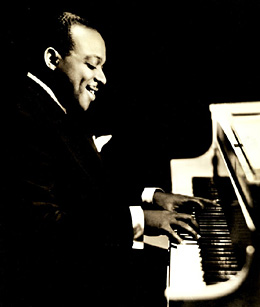
Bandleader Count Basie on piano

On July 8, 1966, William B. Williams, “the voice of WNEW Radio,” introduced crooner Sammy Davis, Jr. as the “world’s greatest entertainer.” He rhythmically snapped his fingers and sang “This Will Be My Shining Hour,” which came true. During his second number, “Change Partners,” he carried a mic as he walked to the lawn distinguishing the stage and the audience. Then he shifted to a humorous monologue, Anthony Newley, Rodgers and Hart, and R&B tunes, and left the audience wanting more. He later starred in “Super Night at Forest Hills,” a 1977 televised musical comedy, where he is joined by Arthur Ashe in a play, Alan King and Buddy Hackett portraying old-time tennis pros reuniting, as well as Andy Williams who commemorated tennis through songs.


The Four Tops, 1968 Forest Hills Music Festival program, Courtesy of Rego-Forest Preservation Council


The Four Tops & Marvin Gaye ad, 1968 Forest Hills Music Festival program, Courtesy of Rego-Forest Preservation Council

The Four Tops, a male vocal quartet from Detroit that performed on July 29, 1967, were memorable for their hand-clapping, foot-stomping, and thigh-slapping, as evident in their lyrics in “Shake Me. Wake Me” and “Reach Out and I’ll Be There.” Other tunes were “Baby I Need Your Loving,” “In The Still of The Night,” and “I Can’t Help Myself.” A great energy swept the stadium with one of the groups that helped popularize the sound of Motown of the 1960s. The Four Tops also appeared with Marvin Gaye and King Curtis and His Kingpins on August 24, 1968.


Marvin Gaye, 1968 Forest Hills Music Festival program, Courtesy of Rego-Forest Preservation Council


Bee Gees & King Curtis Atco Records ad, 1968 Forest Hills Music Festival program, Courtesy of Rego-Forest Preservation Council


The Jimi Hendrix Experience, November 5, 1968

The Jimi Hendrix Experience opened for the Monkees on July 14 to July 16, 1967, which was unique since their style was distinctive between acid rock and a pop band, respectively. On July 16th, Hendrix threw down his guitar and exited from Monkeemania, and tour promoter Dick Clark was left speechless. During one of his performances, he envisioned concertgoers to sing along with “Foxy Lady,” but instead they screamed “Foxy Davy,” being obsessed with Davy Jones of the Monkees. Hendrix left the tour amicably, and it was not a total loss, since his hit “Purple Haze” climbed the U.S. singles chart.


Jimi Hendrix at Forest Hills Stadium, 1967, Courtesy of Forest Hills Stadium


Nancy Wilson ad, 1968 Forest Hills Music Festival program, Courtesy of Rego-Forest Preservation Council


1968 Forest Hills Music Festival program, Courtesy of Rego-Forest Preservation Council


1968 Forest Hills Music Festival program, Courtesy of Rego-Forest Preservation Council

Pop singer Nancy Wilson and the 5th Dimension opened the 9th season of the Forest Hills Music Festival on June 22, 1968. The quintet was recognized for their repertoire ranging from soul to pop, where their blend of rich harmonies grants a five dimensional sound. The group also performed nearly 20 hits on August 16, 1969 including “California Sun,” “Up, Up and Away,” and “Hair.” A highlight of the evening was the finale arrangement of “Aquarius” / “Let The Sunshine In,” where the musicians engaged in groovy dancing and ventured off the stage and sang to the fans.


The 5th Dimension ad, 1968 Forest Hills Music Festival program, Courtesy of Rego-Forest Preservation Council


Shorty Long at the piano


1968 Forest Hills Music Festival program, Courtesy of Rego-Forest Preservation Council


1968 Forest Hills Music Festival program, Courtesy of Rego-Forest Preservation Council


Matchbook cover for 1968 Forest Hills Music Festival featuring Diana Ross & The Supremes, Courtesy of Rego-Forest Preservation Council

Diana Ross and the Supremes appeared with Stevie Wonder and Shorty Long on August 3, 1968. Diana Ross was the hostess and gave the stage to Shorty Long, performer of “Here Comes The Judge” and “Never Going To Give You Up,” two hits which were enthusiastically received. Stevie Wonder followed with a routine noted for his groovy pace, and began with “Precious Sweetheart,” followed by hits such as “Place In The Sun,” “Uptight,” and an instrumental rendition of “Alfie” on the harmonica. The stadium echoed from foot-stomping and thunderous clapping. “Big Stevie,” who was considered a young veteran of the stage, also self-accompanied numbers on electric piano and drums. Then came “pride of Motown” Diana Ross and the Supremes, who performed a medley consisting of “Stop in The Name of Love,” “Come See About Me,” and “Love Is Here.” That was followed by a humorous performance of “Queen of the House.”


Diana Ross concert ticket, Courtesy of Rego-Forest Preservation Council


1968 Forest Hills Music Festival program, Courtesy of Rego-Forest Preservation Council


Richie Havens in 1974, Courtesy of William Morris Agency

From $3.50 to $6.00, fans could see Richie Havens on July 19, 1969. He consolidated soul, folk, and rhythm & blues. He was no match for rock singer Janis Joplin who placed a Southern Comfort bottle on the piano and told police to get off the stage or she will not sing, and then they backed off. Joplin would blast her songs, but Havens was known for his easygoing tempo.


Dionne Warwick from her August 29, 1969 television special

Dionne Warwick appeared with Sam & Dave, a soul and R&B duo on July 12, 1969. “Soul Man” and “Hold On, I’m Comin’” were among their most popular tunes. At that time, her most popular numbers were Burt Bacharach tunes such as “I’ll Never Fall in Love Again.” She is considered among the 40 largest hit makers of the rock era based on Billboard’s Hot 100 Pop Singles Charts.


Sam & Dave in Billboard, October 26, 1968

Concertgoers witnessed a surprise package on stage on July 23, 1977, and when it was torn open, Diana Ross emerged. Her ballads consisted of “Send in the Clowns” and “The Lady is a Tramp.” Then she said she would turn the stadium into a discotheque and hits included “Love Hangover.” The N.Y. Amsterdam News read, “She asked a young man in the audience who was wearing a ‘Diana is Dorothy in the Wiz’ sweatshirt to dance with her, and he, overwhelmed and willing, did just that.” “I love you, Diana” became the rule by fans throughout the evening.


Donna Summer & Brooklyn Dreams July 28, 1979 ticket, Courtesy of Rego-Forest Preservation Council

A fan could purchase a $20 ticket for a portal box seat for “A Summer Night’s Dream Show” on July 27 and July 28, 1979 featuring “Queen of Disco” Donna Summer and special guest Brooklyn Dreams. These sold-out concerts brought her hits into the spotlight including “I Feel Love,” “Last Dance,” “Hot Stuff,” “Love To Love You Baby,” and “Bad Girls.” That month she topped the Hot 100 singles chart, Billboard 200 albums chart, and the Soul singles chart. She is the recipient of five Grammy Awards.


Donna Summer in the recording studio, September 1977, Casablanca Records


The whimsical 1968 Forest Hills Music Festival program, Courtesy of Rego-Forest Preservation Council

Saturday, February 6, 2021

Sweet Memories of Eddie’s Sweet Shop as Witt’s Confectionery & Ice Cream

 By Michael Perlman

Eddie's Sweet Shop, January 2021, Photo by Michael Perlman

Forest Hills is known for tennis, music, and of course ice cream! Eddie’s Sweet Shop at 105-29 Metropolitan Avenue holds the record for the most intact and what is likely the longest continuously operating ice cream parlor citywide.

In July 1979, artist Randy Jones sketched “The Great Ice Cream Safari” comic strip for The New York Times, which featured an elephant touring ice cream parlors, an endangered species. Eddie’s Sweet Shop was saved for last, where a patron on a swivel stool said, “This antique parlor would make a fine trophy in the Smithsonian!”

That vision continues today as patrons encounter vintage signs with Coca-Cola insignias and thematically decorated windows with stained-glass reading “Candy” and “Ice Cream.” Around 20 homemade flavors are prepared on the premises along with fresh whipped cream. Original flavors include rum raisin, butter pecan, and tutti frutti.

Patrons can sit on the same cast-iron swivel stools their great-grandparents sat on and enjoy a sundae or a float at the mahogany and marble counter facing stenciled built-ins and one of the first electric Frigidaire freezers. The authentic ambiance also features a honeycomb pattern mosaic floor, a tin ceiling with rose stamped molding, leaded glass windows with a sunburst and tulip motif, and tapestry appointed woodwork topped off by a wall clock by the pioneer Seth Thomas Clock Company.

In 1925, a 2-story brick building with a corner entranceway was filed and Seelig & Finkelstein drafted blueprints. One of the earliest owners was reportedly Mr. Krohn, followed by Schaefer. Around the mid-1940s, the shop was renamed Witt’s Ice Cream & Confectionery after owner William Witt, a German immigrant. When Witt retired, he sold the shop to the Citrano family in 1968, and it became a success ever since. Giuseppe and his son Vito Citrano and wife Angelina are cherished Forest Hills personalities. Three generations worked alongside one another until Vito’s grandpa, also Vito, passed away in 1995.

Three generations of the Citrano family in the footsteps of the Witts, 2014 photo by Michael Perlman 

Much of the shop’s history prior to 1968 is undocumented, but is being rediscovered thanks to the memories of patrons. Owner William Witt and his wife Elsie, who were often addressed as Mr. and Mrs. Witt, as well as their daughter with the same name, would also be proud.

Michael Dillon lived around the corner on Nansen Street since 1953, and after playing ball in the street with his friends, Witt’s was the go-to place. He said, “In the mid-60s while working at Associated Food Stores on Metropolitan Avenue, I was fortunate to deliver sugar and get a glimpse of all the wonderful ice cream making machines. The Witts were always such kind and lovely people, who always reminded me of the ideal grandma and grandpa.”

“My father, Joseph proposed to my mother, Clara at Witt’s. It was a fine treat for our parents to take my sisters and I on a walk there in the summer, and we always sat in ‘Mom and Dad’s booth,’ which was the first towards the back,” said Joe Burchill, who lived on Greenway Terrace followed by Burns Street. He reminisced, “I tried my first ice cream soda and my first sundae there. All of their ice cream was so creamy and the taste was very real. My absolute favorite was coffee.” He was also tempted by the candy display across from the soda fountain. “There were so many, it was hard to choose, but root beer barrels were a favorite.” He also remembered unique Panasonic radio ads photographed there. “They were promoting their unusually shaped and brightly colored line. There was a spherical radio and the ‘Toot-a-Loop’ that you could put on your wrist and untwist, so it could stand up on its own.”

John Mattis lived on Loubet Street and now resides near Tampa. He said, “I remember watching Mr. Witt pack the containers, really pushing the ice cream into them as hard as he could. Later on, when I would get ice cream from other places and watched them pack it gingerly, I realized how much the Witts always did the right thing for their family of customers. I also remember the cold feel of the marble countertops, the glorious banana splits, and the girls swim teams that would pack the booths and loudly and joyously talk among themselves. I was always sneaking a peak on a girl I liked!”

Witt's ad, December 1958, Community House Chatter publication 

Northern California resident Nick Covell feels fortunate to have lived in Forest Hills three times. “I delivered the Long Island Press there in 1956. When I collected for the 40 cents a week bill, Bill Witt used to give me a 35-cent malted for a tip, a big deal for a 13-year-old kid.”

Another account of graciousness was shared by Paul Hettler, who was raised on Kessel Street. “My dad and I would walk there every Saturday in the mid-fifties, and he would buy me a vanilla ice cream soda which cost about a quarter. A few years later, when I was old enough to walk alone, I would get the ice cream soda and give Mr. Witt a quarter. This went on for several weeks, when finally, he quietly told me they haven’t been a quarter for several years.”

Nancy Jeanne O’Connor, a Bronxville and Danbury resident, was raised on Manse Street between 69th and 70th Avenue. She said, “Many a night between 1951 and 1962, my parents walked up to Witt’s for dessert. Mom’s favorite was butter pecan and dad’s was chocolate, sometimes with orange sherbet. Our Lady of Mercy had processions of the little girls usually on Holy Thursday and the Feast of Corpus Christi, and many of us went to Witt’s afterward with our friends and parents. We went many Sundays with the ‘Klaum girls.’ We ordered hot fudge sundaes, but when funds were low, a 15-cent cherry coke. Now my siblings and I have the pleasure of introducing the next generation to Eddie’s, and it was always a special treat for them.”

Phyllis Pellitteri Cush especially remembers marshmallow sundaes and quality time at Witt’s after swim meets at Our Lady Queen of Martyrs. “My friends and I used to storm into Witt’s at one time and take over the whole shop. Sometimes there weren’t enough seats for us. I cannot forget the icicles in our hair!”

Andrea Stone also recalled swim meets, which were followed by banana splits and chocolate egg creams. Witt’s was also a tradition after 6th to 8th grade dances at The Community House. She said, “I told a friend in Colorado that Witt’s is now Eddie's Sweet Shop, and he said that he can't wait to try it the next time he goes to NYC. I love that it still looks the same!”

Reflecting on how the beloved ice cream parlor withstood the test of time, the Citrano family had much to share. “We feel so happy to see that Eddie’s Sweet Shop served generations of customers through the years we have been here, as well as new ones. Our family estimates that over 30 films, commercials, and ads have been produced at our shop during the years we own it.” Vito added, “My father showed me not to be afraid to work hard. When it’s time to make hot fudge, I will keep stirring until it’s right, no matter how late it is or tired I am.” Angelina is also grateful. “We had many proposals at Eddie’s, and the first wedding ceremony in front of our doors a few months ago. We were honored!”

Wednesday, December 30, 2020

A Forest Hills Tradition at Traymore Chemists

By Michael Perlman


Mom & pop shops once lined the streets of Forest Hills, granting much personalization and ambiance, but today small businesses built on tradition are increasingly an endangered species. This is due to high rents, changing demographics, the pandemic, and the lack of interest in younger generations to acquire the business or a landlord or tenant’s disinterest in making it available for another party.

Among Forest Hills’ longest continuously operating family businesses is Traymore Chemists at 110-80 Queens Boulevard, which was owned by Kenneth Liebowitz for over four decades. “Growing up, I never fully appreciated how hard my father worked to support our family, but one thing I knew is that he was very proud of his business,” said Kew Gardens Hills resident David Liebowitz, who began running the business after his father retired a few years ago. Now he feels privileged for the opportunity to continue building upon his father’s service to the community and preserve a classic business.

Original owner Kenneth Liebowitz

Patrons enter a classic recessed storefront with an original wooden door, and encounter authentic wooden built-ins and “Prescriptions” stylistically painted on the wall behind a counter with a vintage torsion balance and a pharmacy class cup, contributing to the charm. It is Traymore Chemists’ mission to offer the most economical prices for vitamins, over-the-counter medications, DMV eye exams, diabetic stockings, walkers, wheelchairs, blood pressure monitors, knee and back braces, fragrances, etc. They offer senior care specialty services and free delivery. Staff members relate to a diverse community by their ability to speak Spanish and Greek.

Michael Perlman, Owner David Liebowitz, & District 29 City Council Candidate Michael Conigliaro


Liebowitz acquired a first-hand lesson over time, despite not working at Traymore Chemists early on. He explained, “My father took great pride in serving customers, but even more than that, he really made customers feel like family. When I say that, I am not exaggerating. He truly cared about people, and they loved him for it. Ask anyone who knew him, and they will tell you the same thing.”


“When I began to run the business, I hired new pharmacists in the mold of my father,” he said. They are Anna Antiaris and Kathy Legakis, who have also become much admired community personalities. He continued, “I can tell you 100 percent that they really are like my father, since they are so special in that same way. They have such pleasant personalities.”

Kenneth Liebowitz, Courtesy of David Liebowitz

A pharmacy existed on site prior to Traymore Chemists, which was known as Jules Landsberg Pharmacy in 1963 and possibly earlier. Patrons would dial BO 1-8440. Today, the phone number is consistent, but in a numerical form, 718-261-8440 to reach Liebowitz and his colleagues.

Such a business poses advantages over a large chain. Liebowitz emphasized how crucial it is for the community to support small businesses and their neighbors, especially during the pandemic. “We are all suffering due to Covid-19, and as a society, we need to help each other by supporting our local small businesses. In today’s world, society has become so emotionally distant, but people crave friendliness and warmth. Our goal is to make people feel good when walking into our pharmacy by knowing their name and treating them with dignity and respect.”

Recently, an elder patron needed assistance and called the shop, so Liebowitz fulfilled his mission to “save the day!” He explained, “I asked our delivery person to assist them. We have elderly customers that sometimes ask us to pick something up for them at the food store, so we do it for them. It is our pleasure, since we want to be known in our community as the place that everyone can turn to, and especially for seniors who need some extra care.”

“My father used to call his customers ‘friends and family,’ and that’s exactly what I want to continue,” said Liebowitz.

A similar version was published in Michael Perlman's Forest Hills Times column: